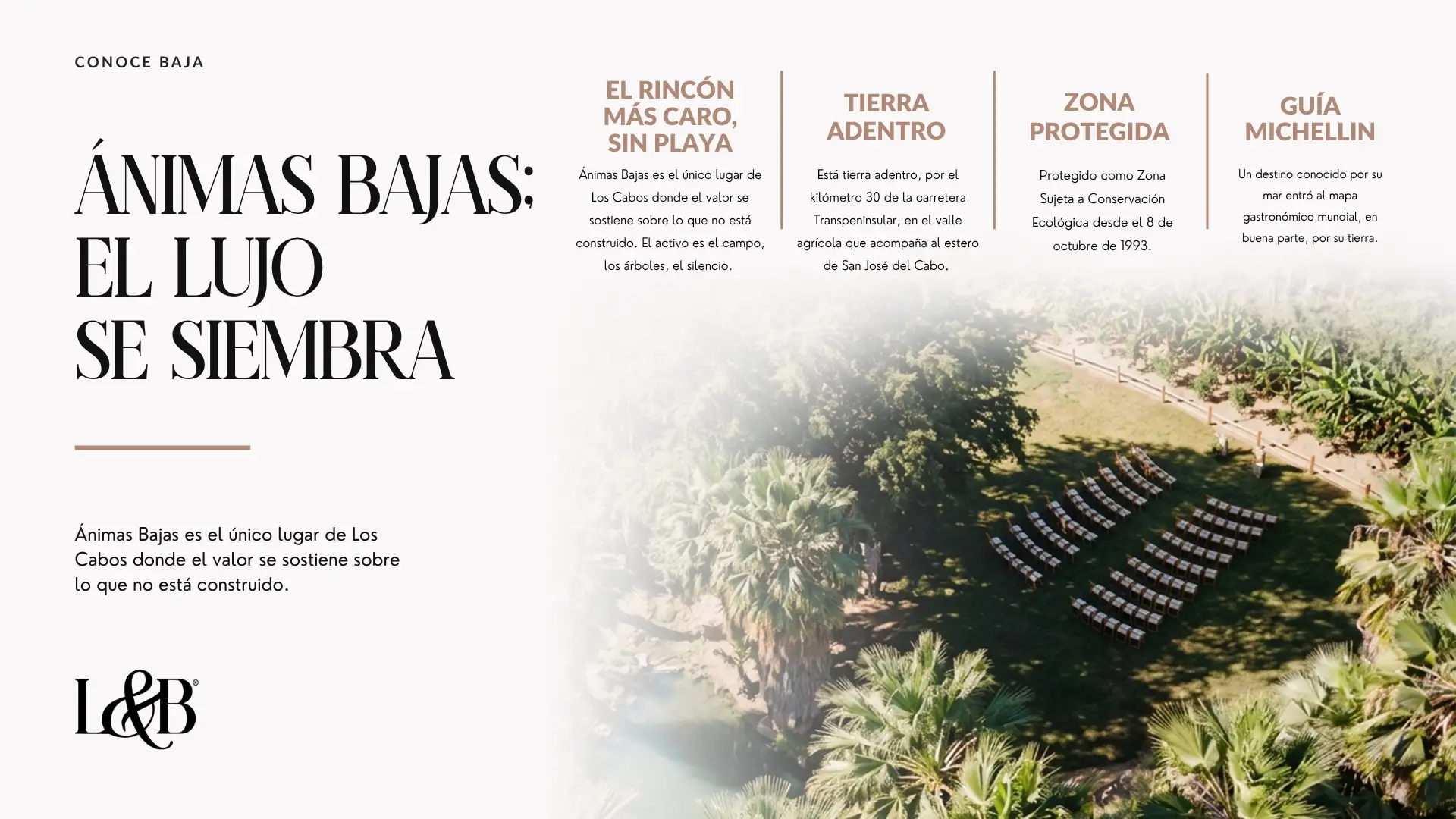
Ánimas Bajas: el lujo se siembra

Baja California Sur ha sido vendida al mundo como una postal perfecta: playas doradas, atardeceres de revista y estilo de vida relajado. Pero detrás del marketing turístico y de los desarrollos frente al mar, hay un territorio vasto, crudo y profundamente simbólico que rara vez entra en el encuadre: el desierto.
Lejos de ser un vacío, el desierto sudcaliforniano es un espacio cargado de sentido. No solo por su biodiversidad —que lo convierte en uno de los ecosistemas más frágiles y fascinantes de México— sino por la historia, los saberes, las formas de vida y la estética que emergen de él. Es aquí donde habita una identidad cultural silenciosa pero profunda, que ha sido sistemáticamente ignorada en los discursos de progreso.
Pueblos como El Triunfo, San Antonio y Mulegé en el norte; pero también La Candelaria, Migriño, Santiago, Miraflores y Caduaño en el municipio de Los Cabos, son testigos de una herencia cultural que ha sobrevivido al paso del tiempo. Ahí, la vida comunitaria, las tradiciones rurales, la arquitectura de adobe, las prácticas agrícolas ancestrales y las fiestas patronales aún forman parte del tejido vivo del territorio.
Sin embargo, el imaginario dominante sigue anclado al binomio “sol y mar”, como si la riqueza cultural del estado se limitara a la zona hotelera o los resorts frente al mar. En contraste, el desierto es espacio de introspección, de resiliencia y de belleza austera: un territorio que ha sido olvidado en las narrativas de desarrollo.
En los últimos años, algunos proyectos arquitectónicos y artísticos han comenzado a rescatar la poética del desierto: estructuras que dialogan con el viento, instalaciones efímeras que rinden homenaje al paisaje árido, artistas que se inspiran en la luz y la soledad del terreno. Pero son la excepción, no la norma.
Mientras se construyen campos de golf sobre tierras secas y se importan estilos “mediterráneos” ajenos al entorno, el verdadero valor simbólico del desierto queda relegado. Y con él, su gente.
Reconocer el desierto como cultura es un acto político.
Es ampliar la mirada. Es construir desde lo propio, no desde la imagen que se vende al turista. Es entender que Baja California Sur no solo se recorre con traje de baño, también con respeto, memoria y profundidad.
Porque solo cuando veamos al desierto como patrimonio, dejaremos de tratarlo como un vacío por llenar.
Baja California Sur has long been marketed to the world as a picture-perfect destination: golden beaches, magazine-worthy sunsets, and a laid-back lifestyle. But behind the tourist campaigns and beachfront developments lies a vast, raw, and deeply symbolic territory that rarely makes it into the frame: the desert.
Far from being empty, the desert of Baja California Sur is a space rich with meaning. Not only because of its biodiversity—which makes it one of the most fragile and fascinating ecosystems in Mexico—but because of the history, wisdom, ways of life, and aesthetics that have emerged from it. Here lives a quiet yet powerful cultural identity, one often ignored in narratives of progress.
Towns like El Triunfo, San Antonio, and Mulegé in the north—but also La Candelaria, Migriño, Santiago, Miraflores, and Caduaño in the municipality of Los Cabos—bear witness to a heritage shaped by mining, rural life, missions, and deep-rooted traditions. Adobe architecture, handmade textiles, firewood kitchens, dirt roads, and local festivals aren’t folklore—they are living culture. Yet the dominant image of the region remains fixated on “sun and sea,” as if the state’s cultural richness were limited to beachfront zones.
In recent years, a few architectural and artistic projects have begun to recover the desert’s poetry: structures that respond to the wind, ephemeral installations that honor the arid landscape, artists inspired by the light and solitude of the terrain. But these are exceptions.
While golf courses are built over dry land and “Mediterranean-style” villas are imported into a fragile ecosystem, the desert’s symbolic value—and its people—are being pushed aside.
Recognizing the desert as culture is a political act.
It means widening our view. It means building from within, not from the image sold to tourists. It means understanding that Baja California Sur isn’t just explored in swimwear—but with respect, memory, and depth.
Only when we see the desert as heritage will we stop treating it as a blank space to be filled.