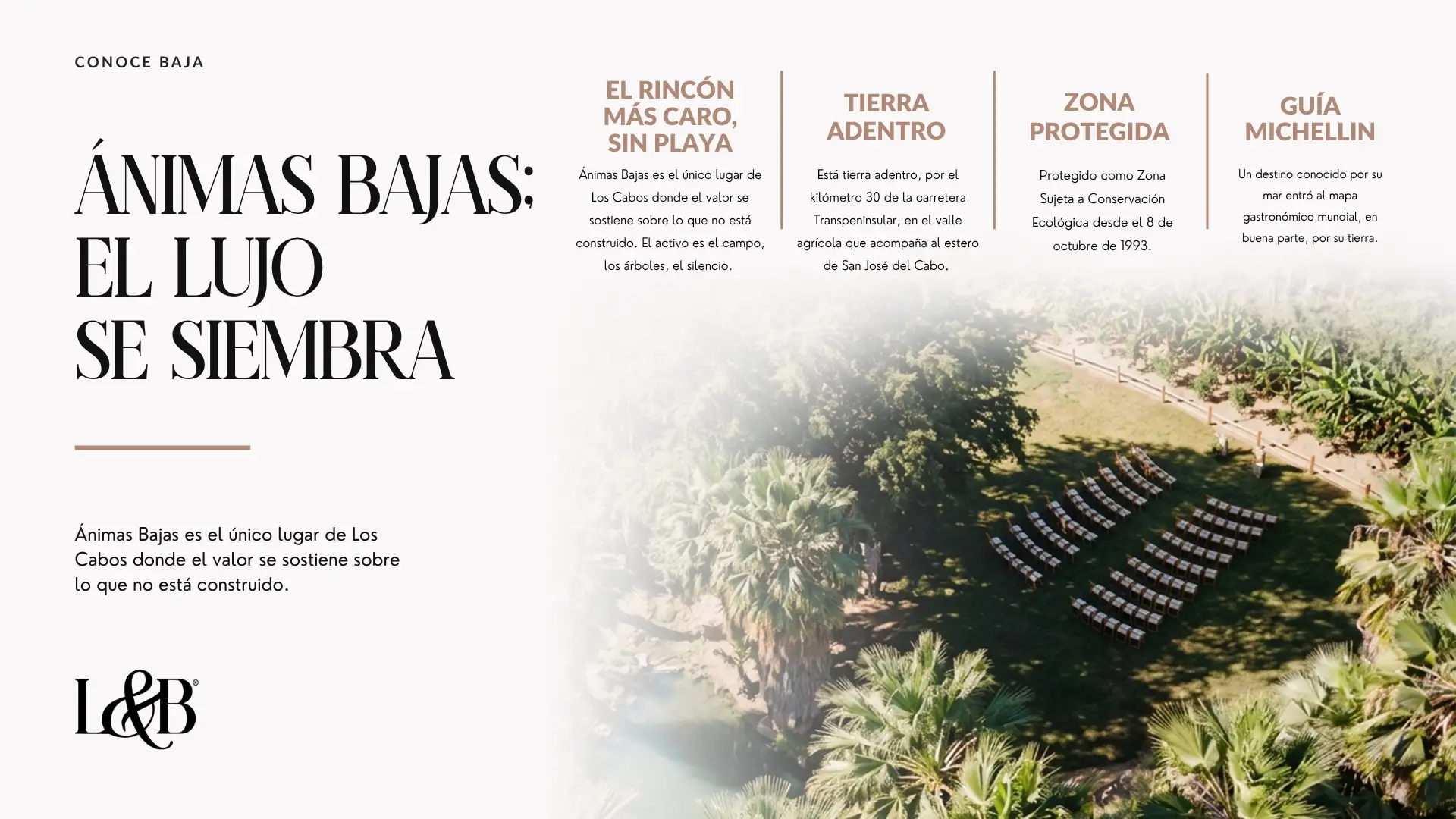
Ánimas Bajas: el lujo se siembra

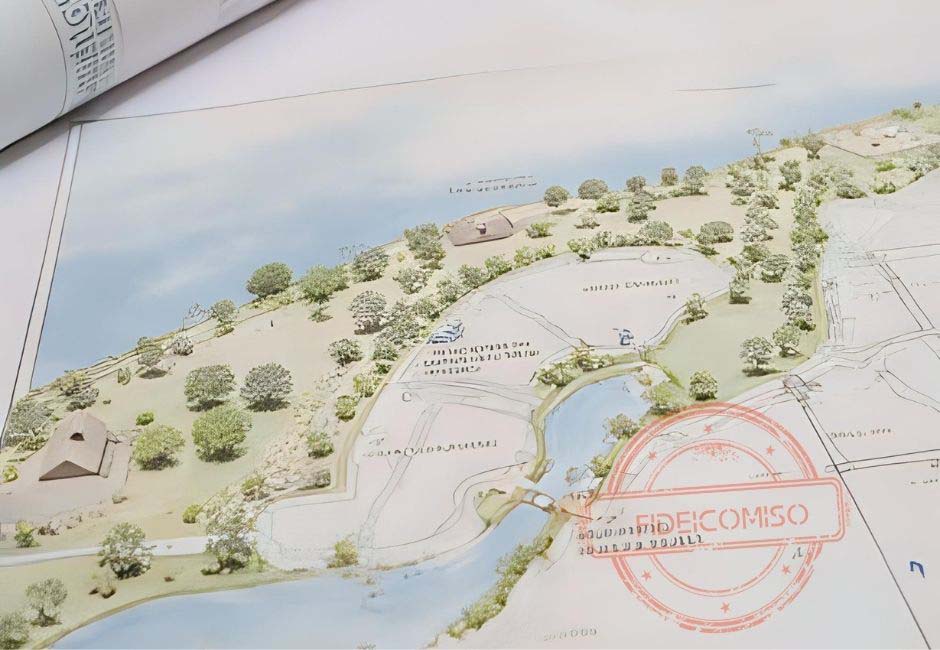
Fideicomiso: territorio bajo firma extranjera
Desde hace décadas, el fideicomiso bancario ha sido la puerta de entrada para que extranjeros adquieran propiedades dentro de la llamada “zona restringida”, que incluye playas, fronteras y gran parte del territorio de Los Cabos. Lo que comenzó como un mecanismo legal para atraer inversión, hoy se ha convertido en una figura clave —y en muchos sentidos invisible— que define quién puede poseer, desarrollar y beneficiarse de la tierra en esta región.
Los Cabos no solo se desarrolla frente al mar: se reconfigura también sobre el papel, bajo contratos firmados lejos de aquí.
El fideicomiso permite que un banco mexicano actúe como titular formal de una propiedad, en nombre de un extranjero, quien figura como beneficiario. Esta figura legal, aunque ampliamente utilizada y reconocida, plantea preguntas fundamentales sobre soberanía, regulación y trazabilidad.
En teoría, el banco custodia. En la práctica, el control económico, las decisiones sobre la tierra y los beneficios generados recaen íntegramente en el inversionista extranjero.
Aunque no existe una base de datos pública que desglose exactamente cuántos inmuebles en Los Cabos operan bajo fideicomisos, estimaciones del sector inmobiliario señalan que más del 60 % del inventario residencial de lujo está asociado a compradores internacionales que utilizan este mecanismo. El porcentaje se eleva aún más en zonas como Cabo del Este, Pedregal, Palmilla o la costa de La Ribera.
Se trata de hectáreas completas que, aunque formalmente mexicanas, están regidas por intereses transnacionales.
Para los desarrolladores, el fideicomiso representa una herramienta flexible: permite comercializar proyectos entre compradores internacionales sin necesidad de naturalización o estructuras societarias complejas. Para los compradores, garantiza acceso a tierra en una ubicación estratégica y de alta plusvalía, con la protección jurídica del sistema bancario mexicano.
Sin embargo, esta misma figura también funciona como cortina legal que dificulta la transparencia. En muchos casos, los beneficiarios de los fideicomisos no son personas físicas, sino empresas registradas en otras jurisdicciones. Esto complica el seguimiento fiscal, la planificación territorial y la fiscalización de los desarrollos inmobiliarios.
En un entorno donde la tierra se convierte en activo financiero más que en sustento territorial, la pregunta es inevitable:
El fideicomiso, como figura jurídica, fue creado para facilitar la inversión. Pero su masificación, su complejidad y su uso combinado con otras estructuras legales hoy plantea retos que van más allá de lo notarial. Habla de modelos de ciudad, de identidad local, de soberanía económica.
Una invitación al debate
No se trata de satanizar la figura legal, sino de comprender su alcance real. En un contexto global donde el capital no tiene pasaporte, el territorio sí debería tener memoria. Y reglas claras.
Los Cabos necesita discutir, con seriedad y sin tabúes, qué significa hoy ser propietario en este paraíso… y qué tan lejos queda esa firma que, en el papel, lo sostiene todo.
Trust: Territory Under Foreign Signature
The legal figure enabling foreign capital to access—and control—land in Los Cabos
For decades, the bank trust has been the gateway for foreigners to acquire property within Mexico’s so-called «restricted zone,» which includes beaches, borders, and much of the territory of Los Cabos. What began as a legal mechanism to attract investment has evolved into a key—and in many ways invisible—structure that determines who can own, develop, and profit from the land in this region.
Los Cabos doesn’t just develop along the coastline; it’s also redrawn on paper, through contracts signed far from here.
The trust allows a Mexican bank to formally hold title to a property on behalf of a foreign beneficiary. While this legal structure is widely used and recognized, it raises essential questions about sovereignty, regulation, and transparency.
In theory, the bank holds the title. In practice, economic control, development decisions, and the benefits generated fall entirely to the foreign investor.
Although there is no public database that breaks down exactly how many properties in Los Cabos are held in trust, real estate sector estimates suggest that more than 60% of luxury residential inventory is linked to international buyers using this mechanism. In areas like East Cape, Pedregal, Palmilla, or the coast of La Ribera, that figure is even higher.
These are entire hectares that, though formally Mexican, are governed by transnational interests.
For developers, the trust represents a flexible tool: it allows projects to be marketed to international buyers without the need for naturalization or complex corporate structures. For buyers, it ensures access to highly valuable land in a strategic location, with the legal backing of a Mexican financial institution.
However, the same figure also functions as a legal veil that hinders transparency. In many cases, the trust beneficiaries are not individuals but companies registered in other jurisdictions. This complicates fiscal tracking, urban planning, and proper oversight of real estate development.
In an environment where land is treated more as a financial asset than as territory, one question becomes inevitable:
The trust, as a legal figure, was designed to facilitate investment. But its widespread and complex use—often in tandem with other legal structures—now presents challenges that go far beyond real estate transactions. This is a matter of city models, local identity, and economic sovereignty.
An invitation to reflection
This is not a call to demonize a legal tool, but to understand its true scope. In a global context where capital has no passport, territory must still have memory. And clear rules.
Los Cabos must begin to discuss, seriously and openly, what it means today to be a property owner in this paradise… and how far away the hand that signs the title might be.