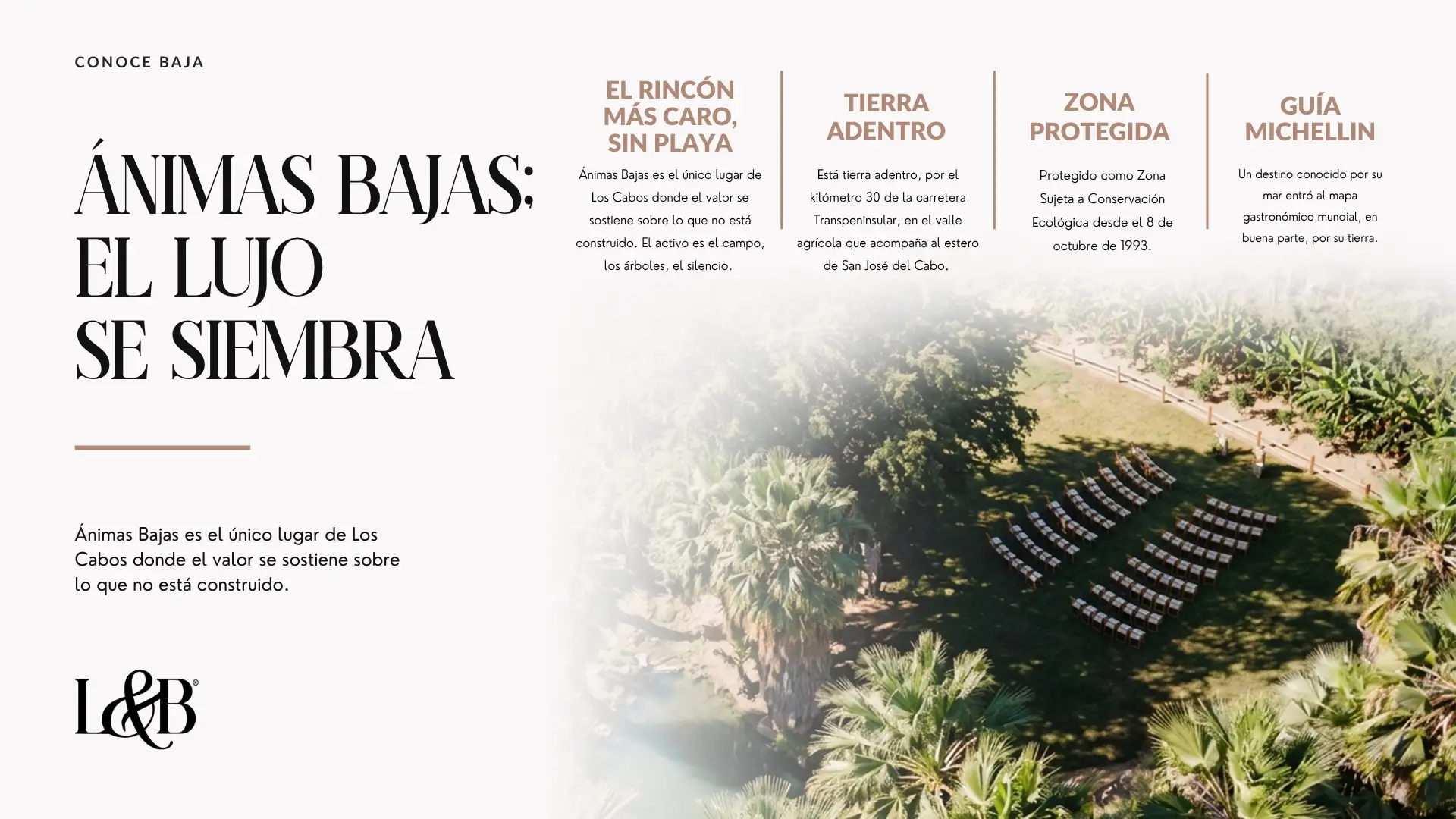
Ánimas Bajas: el lujo se siembra


Mientras el mercado inmobiliario de Baja California Sur se vuelve más complejo, global y competitivo, las universidades locales siguen formando profesionales como si nada hubiera cambiado. Planes de estudio desactualizados, escasa vinculación con el sector privado, y una falta crónica de enfoque multidisciplinario han creado una brecha preocupante: los egresados saben construir… pero no saben operar, vender ni gestionar el desarrollo inmobiliario.
En Los Cabos, uno de los destinos con mayor dinamismo en inversión turística y residencial de lujo en todo el país, la formación universitaria sigue anclada en un modelo técnico y desconectado de la realidad del mercado. Arquitectos que no entienden la lógica del ROI. Ingenieros civiles que no han tocado un proforma financiera. Urbanistas que no han visto una licencia de uso de suelo real. El divorcio es evidente.
Esto no solo es un problema académico: es un cuello de botella económico. Porque las necesidades del mercado actual exigen perfiles híbridos capaces de entender no solo cómo construir, sino cuándo, dónde, para quién y con qué estrategia comercial.
El mercado ya no busca solo constructores; busca promotores con visión, con nociones de finanzas, marketing, normatividad, sustentabilidad, lenguaje legal y responsabilidad social. Y el gran reto es que el aula, hoy por hoy, no los está formando.
Existen iniciativas aisladas: cátedras opcionales, diplomados extracurriculares, ferias de vinculación. Pero no hay una reforma estructural que entienda que el desarrollo inmobiliario ya no se mueve con las reglas de hace 20 años.
¿Queremos que nuestros profesionistas participen activamente en la transformación urbana de BCS o que sigan relegados al papel de ejecutores técnicos?
Porque si no cerramos pronto esa brecha entre el conocimiento académico y el conocimiento del mercado, seguiremos exportando talento bien intencionado, pero sin herramientas para incidir en el desarrollo real de nuestras ciudades.
Baja California Sur has long been marketed to the world as a picture-perfect destination: golden beaches, magazine-worthy sunsets, and a laid-back lifestyle. But behind the tourist campaigns and beachfront developments lies a vast, raw, and deeply symbolic territory that rarely makes it into the frame: the desert.
Far from being empty, the desert of Baja California Sur is a space rich with meaning. Not only because of its biodiversity—which makes it one of the most fragile and fascinating ecosystems in Mexico—but because of the history, wisdom, ways of life, and aesthetics that have emerged from it. Here lives a quiet yet powerful cultural identity, one often ignored in narratives of progress.
Towns like El Triunfo, San Antonio, and Mulegé in the north—but also La Candelaria, Migriño, Santiago, Miraflores, and Caduaño in the municipality of Los Cabos—bear witness to a heritage shaped by mining, rural life, missions, and deep-rooted traditions. Adobe architecture, handmade textiles, firewood kitchens, dirt roads, and local festivals aren’t folklore—they are living culture. Yet the dominant image of the region remains fixated on “sun and sea,” as if the state’s cultural richness were limited to beachfront zones.
In recent years, a few architectural and artistic projects have begun to recover the desert’s poetry: structures that respond to the wind, ephemeral installations that honor the arid landscape, artists inspired by the light and solitude of the terrain. But these are exceptions.
While golf courses are built over dry land and “Mediterranean-style” villas are imported into a fragile ecosystem, the desert’s symbolic value—and its people—are being pushed aside.
Recognizing the desert as culture is a political act.
It means widening our view. It means building from within, not from the image sold to tourists. It means understanding that Baja California Sur isn’t just explored in swimwear—but with respect, memory, and depth.
Only when we see the desert as heritage will we stop treating it as a blank space to be filled.