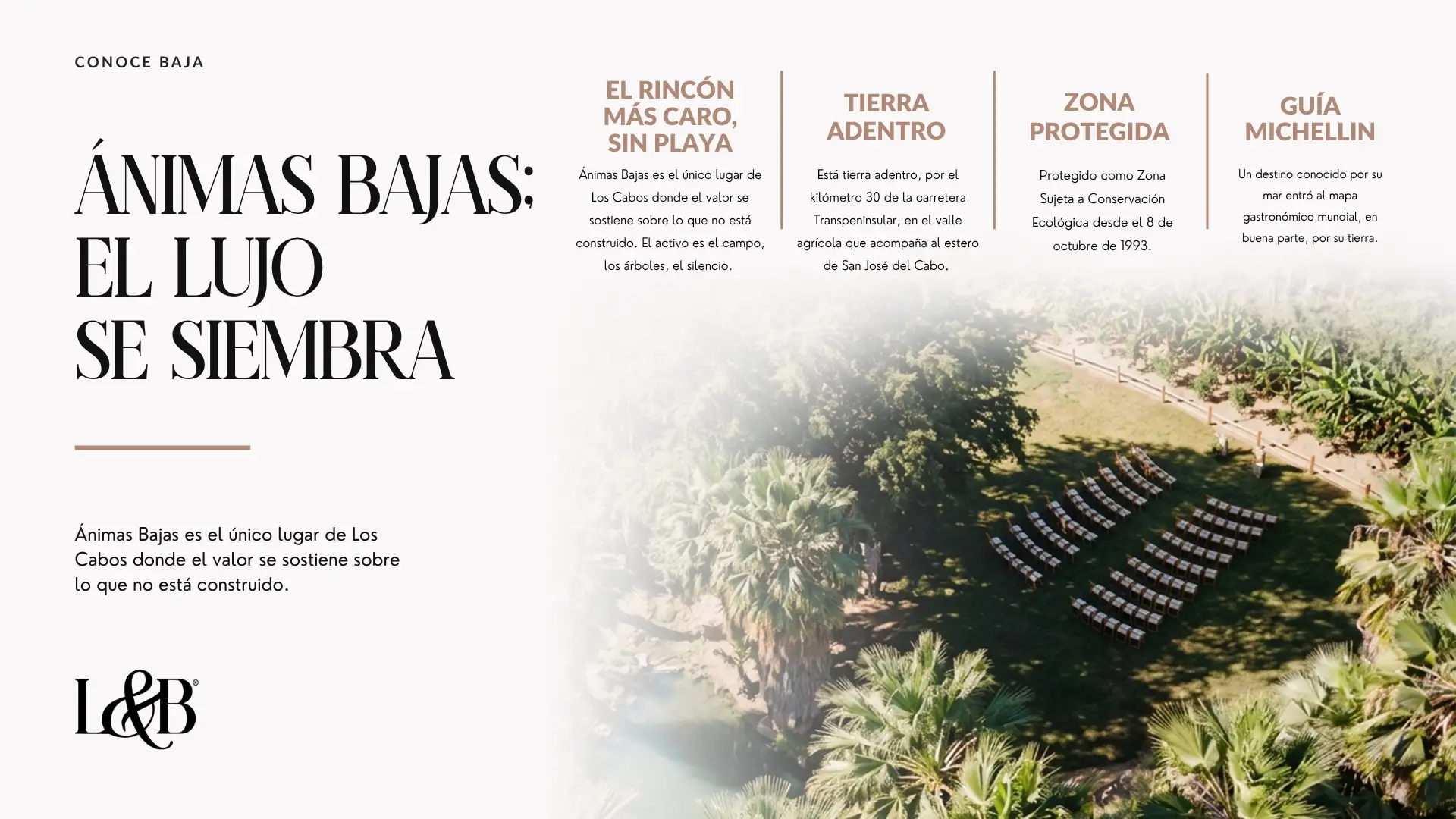
Ánimas Bajas: el lujo se siembra

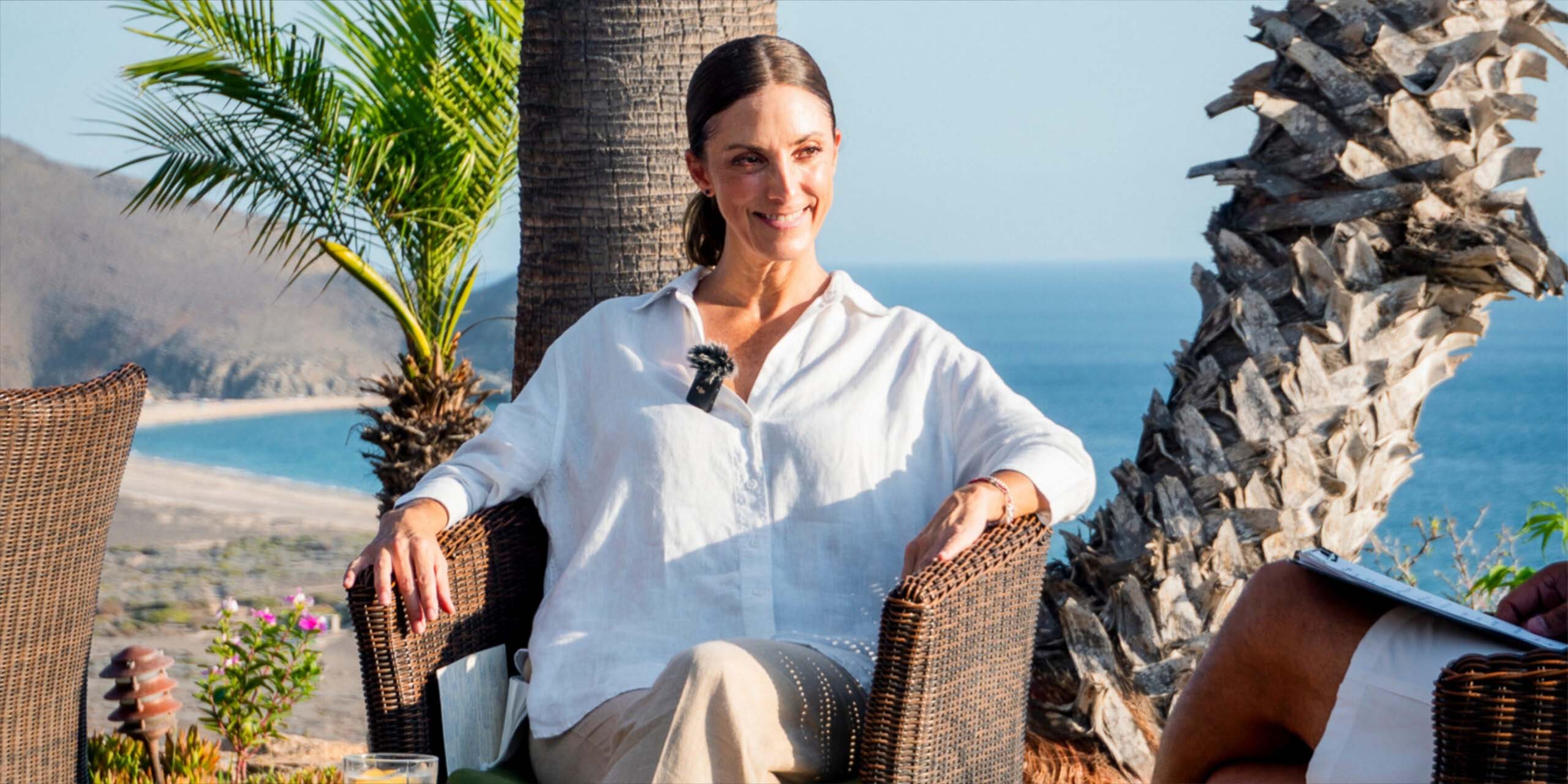
Cada mañana, Marisa Comella camina con su perro. Aunque dice en broma que él la saca a ella, ese paseo es su forma de reiniciar el día. Directora ejecutiva de Los Cabos Children’s Foundation y defensora del bienestar infantil, encuentra en ese rato un espacio de silencio y conexión. Se levanta temprano, se lava la cara, se pone unos shorts y sale al vecindario. Es una morning person: despierta con energía, hambre y ganas de conversar. Esa rutina marca el tono del resto del día: un buen desayuno, algo de escritura y una jornada dedicada al cuidado de los demás… y de sí misma. Su ritual es sencillo, pero esencial: un equilibrio entre movimiento y pausa que la mantiene centrada.
Marisa Comella es hija de migrantes cubanos. Sus padres y sus cuatro hermanos mayores salieron de Cuba tras la llegada de Fidel Castro en 1960. Se establecieron primero en Nueva York, donde vivieron con lo justo. Su padre, abogado, trabajó para mantener a la familia mientras su madre, dedicada al hogar, criaba a sus hijos. “Salieron con una mano adelante y otra atrás, como la mayoría de los cubanos”, recuerda Marisa.
En 1963, una oportunidad laboral en banca llevó a la familia a México. Se asentaron en la Ciudad de México, donde nacieron las hijas mexicanas. “Después de tres años muy duros en Nueva York, en México se sintieron acogidos desde el primer día”, cuenta.
Marisa vivió parte de su adolescencia en Miami, acompañando a su abuela, pero decidió regresar a México para estudiar Relaciones Internacionales. Soñaba con ser diplomática, incluso trabajó en la Secretaría de Relaciones Exteriores, pero la vida tomó otro rumbo. Se casó, tuvo hijos y emprendió con una mueblería familiar.
En 2008 se mudó a Los Cabos con sus tres hijos. Aunque nacieron en la Ciudad de México, “prácticamente todas sus memorias son de aquí”, dice. Hoy, tras 17 años en Los Cabos, Marisa combina su vocación social con una vida plena y profundamente arraigada en la comunidad.
¿Cuál fue el momento crucial que definió lo que eres hoy?
He dado muchas vueltas en el camino. Creo que el universo te manda señales, pero también creo que te toca a ti estar alerta, saber escuchar tu voz interior y distinguir cuál es el camino correcto. No todas las señales lo son.
Decidí estudiar Relaciones Internacionales por una experiencia muy personal: a los 13 años, en plena adolescencia, me mudé a Estados Unidos. Fue un momento complicado. Adaptarme no fue fácil. Venía de una familia multicultural —padres cubanos, abuelos españoles, nací en México— y de pronto estaba inmersa en una cultura completamente nueva. Ese mosaico de identidades me llevó a interesarme por cómo se conecta el mundo. Sentí que traía ya un ADN distinto, una sensibilidad natural para entender distintas realidades.
¿Qué papel ha jugado la maternidad en tu vida personal y profesional?
Otro momento clave en mi vida fue cuando me convertí en mamá. La maternidad no es para todos, pero yo siempre la imaginé en mi historia. Y se me dio esa oportunidad, ese privilegio. Soy mamá de tres: hoy tienen 21, 20 y 18 años. Han tenido salud, oportunidades y una infancia feliz. Estoy profundamente agradecida. Desde mi trabajo en Los Cabos Children’s Foundation, he visto maternidades muy difíciles, y eso me ha hecho valorar aún más el camino que me ha tocado vivir.
¿Cómo fue tu llegada a Los Cabos y, sobre todo, qué fue lo que te hizo decidir quedarte?
Llegué a Los Cabos en 2008 porque el papá de mis hijos, que se dedicaba a la construcción, vino por trabajo y nos trajo a vivir aquí. En ese momento no lo sabía, pero esa decisión sembró una semilla. Años después, cuando nos separamos y él regresó a la Ciudad de México, decidí quedarme. Había algo en mí que me decía con claridad: “Este es tu lugar”.
Como buena chilanga, al principio el ritmo me desesperaba, pero me atrapó muy rápido. Mis hijos eran muy pequeños (tres y medio, dos años y nueve meses) y la posibilidad de que su vida girara en torno a la playa, las albercadas y la naturaleza fue decisiva.
Empecé colaborando en una empresa de promoción turística y deportiva, con eventos como triatlones y maratones. Pero en 2014 llegó el huracán Odile y me replanteé todo. Fue entonces que, en 2015, recibí una llamada de una amiga que me conectó con Los Cabos Children’s Foundation. Cuando vi lo que estaban haciendo por la comunidad, me sentí tocada: pensé, “Qué vergüenza que yo, como mexicana, no esté haciendo ni una fracción de lo que hacen estos americanos por mis paisanos.” Ahí empezó todo.
¿Qué valores crees que te han acompañado y te han llevado a tomar la decisión de integrarte a Los Cabos Children’s Foundation?
Esa nostalgia que acompaña a los migrantes, a quienes tienen que dejar su país o su tierra por necesidad, no por elección, es algo que se queda para siempre. No es lo mismo migrar por gusto que por fuerza. Muchos norteamericanos vienen a Los Cabos por decisión propia, para hacer de este su segundo hogar. Pero cuando migras por necesidad, esa nostalgia se transforma en una forma distinta de arraigo.
Creo que eso también te lleva a valorar profundamente el lugar que te acoge. Mi papá ya no vive, pero mi mamá sí, y ella se siente profundamente mexicana. Está inmensamente agradecida con esta tierra por todo lo que le ha dado: dos hijas mexicanas, 15 nietos y una vida larga y plena. Ha vivido en México muchos más años de los que vivió en su país de origen.
Cuando llegas a un lugar y te recibe con los brazos abiertos, como nos pasó con Los Cabos, surge un compromiso natural: el deseo de hacer comunidad y de retribuir. Para mí, ese impulso es un valor que reconozco claramente en mi historia y que me ha guiado hasta hoy.
¿Dónde encuentras ese lugar de refugio y qué haces para conectar con esos momentos mágicos?
Sin duda, para mí el mar y la playa son mágicos. Ese silencio con el ruido suave del océano me fascina y me brinda paz. Siempre les digo a quienes llegan que Los Cabos es una tierra generosa, no solo en oportunidades económicas, sino también en calidad de vida accesible. A pesar de sus carencias e infraestructura limitada, aquí mis hijos vivieron una infancia sencilla y feliz, caminando en chanclas y pasando fines de semana enteros en la playa. Esa conexión con la naturaleza y la comunidad es un refugio invaluable para mí.
¿Tienes algún mentor en tu vida?
La influencia familiar siempre ha sido muy fuerte en mi vida, especialmente por la experiencia migratoria que dejó una nostalgia profunda en la familia. Hay muchas historias y recuerdos de familiares que apenas conocí o que nunca llegué a conocer, y ese hablar de lo que ya no está forma parte de nuestra historia. En particular, una persona clave es mi hermana Lola, quien vivía en Todos Santos, en una calle que sube hasta el mirador. Pasamos muchos fines de semana ahí y en Pescadero, disfrutando de lugares como la playa Las Palmas, un espacio casi virgen con un pequeño estero y palmar. Es como el Cabo más rural y auténtico, el que yo no tuve oportunidad de conocer en mi infancia.
¿Qué sueñas para para esta comunidad?
Mi sueño es que nadie se quede atrás. En Los Cabos, el crecimiento acelerado ha dejado a muchos sin acceso a servicios y oportunidades, especialmente para los jóvenes. La infraestructura en salud, educación y movilidad es insuficiente, y necesitamos actuar rápido. Aunque parezca un sueño guajiro, creo que es posible si todos nos comprometemos.
Marisa Comella and Her Mission to Transform Los Cabos
Every morning, Marisa Comella walks her dog. Although she jokes that he takes her out, that walk is her cherished ritual for welcoming a new day. As Executive Director of the Los Cabos Children’s Foundation and a passionate advocate for children’s welfare, she finds in that time a moment of silence and connection. She awakens early, washes her face, puts on some shorts, and heads out into the neighborhood. Marisa is a morning person who radiates energy, feeling hungry and eager to initiate a conversation. This daily routine sets a vibrant tone for everything that follows: a hearty breakfast, some writing, and a day dedicated to caring for others—and herself, too. Her ritual is simple, yet essential: a balance between movement and pause that keeps her grounded.
Marisa Comella is the daughter of Cuban migrants who left their home country after Fidel Castro came to power in 1960. Her parents and four older siblings initially settled in New York, where they lived modestly. Her father, a lawyer, worked to support the family while her mother, a homemaker, raised their children. «They left with one hand in front and one behind, like most Cubans,» Marisa recalls. In 1963, a job opportunity in banking led the family to
Mexico. They settled in Mexico City, where their Mexican daughters were born. «After three very challenging years in New York, they felt welcomed in Mexico from day one,» she says.
Marisa spent part of her adolescence in Miami, where she accompanied her grandmother. However, she returned to Mexico to study international relations, as she had dreamed of becoming a diplomat. She even worked at the Ministry of Foreign Affairs. However, life changed when she married, had children, and started a family furniture business.
In 2008, Marisa relocated to Los Cabos with her three
children. Although they were born in Mexico City, she notes that «practically all their memories are from here.» After spending 17 years in Los Cabos, Marisa blends her passion for community work with a vibrant life deeply anchored in the local community.
What was the crucial moment that defined who you are today?
I have taken many detours along my journey. The universe sends us signs, but we must be alert, listen to our inner voice, and discern the right path. Not all signs are what they appear to be
I chose to study international relations due to a deep personal experience. At the age of 13, during my teenage years, I moved to the United States, and it was a challenging time for me. Adapting to a new environment was not easy. Coming from a multicultural background—with
Cuban parents, Spanish grandparents, and being born in Mexico—I found myself immersed in a completely new and different culture. This blend of identities sparked my interest in understanding how the world connects. My unique background gave me a natural sensitivity to appreciate and understand diverse realities.
What role has motherhood played in your personal and professional life?
A pivotal moment in my life was when I became a mother. Motherhood isn’t for everyone, but I always envisioned it for myself, and I was fortunate enough to have that opportunity. I am now a mother of three; they are 21, 20, and 18 years old. I am grateful they have enjoyed good health, ample opportunities, and a happy childhood.
My work with the Los Cabos Children’s Foundation has exposed me to many challenging experiences of motherhood, which has deepened my appreciation for the journey I have been privileged to live.
How did you arrive in Los Cabos, and, above all, what made you decide to stay?
I arrived in Los Cabos in 2008 because my children’s father, who worked in construction, came here for work and brought us along to live with him. I didn’t realize it at the time, but that decision planted a seed for my future. Years later, after we separated and he returned to Mexico City, I decided to stay here. Something inside me instinctively told me, «This is where you belong.»
As a true Chilanga, the fast pace of life initially drove me crazy, but I quickly became hooked. My children were very young, three and a half, two years old, and nine months old —and the opportunity for their lives to revolve around the beach, swimming pools, and nature was a deciding factor for me. I started my career at a tourism and sports promotion company, organising events such as triathlons and marathons. However, after Hurricane Odile struck in 2014,
I reevaluated my life and career. In 2015, a friend reached out to connect with the Los Cabos Children’s Foundation. When I discovered their work for the community, I felt a deep emotional connection. I thought to myself, «It’s a shame that, as a Mexican, I’m not contributing even a fraction of what these Americans are doing for my fellow countrymen.»
That realization marked the beginning of my new journey. What values accompanied you and led you to decide to join the Los Cabos Children’s Foundation?
The nostalgia accompanying migrants—those who must leave their country or homeland out of necessity, rather than by choice—persists forever. Migrating by choice is not the same as migrating under duress. Many Americans come to Los Cabos voluntarily, seeking to make it their second home.
However, when one migrates out of necessity, that nostalgia evolves into a different attachment. This experience often leads to a deeper appreciation for the place that welcomes you. My father is no longer alive, but my mother is, and she feels a profound connection to Mexico. She is immensely grateful to this land for all it has provided her: two Mexican daughters, 15 grandchildren, and a long, fulfilling life. She has lived in Mexico for far longer than in her country of origin. When you arrive at a place that welcomes you with open arms, as we experienced in Los Cabos, a natural commitment emerges: the desire to build community and give back. This impulse is a value I distinctly recognize in my history and has guided me to this day.
Where do you find that place of refuge, and what do you do to connect with those magical moments?
Without a doubt, for me, the sea and the beach are truly magical. The soothing sound of the ocean captivates me and brings me a sense of peace. I often tell newcomers that Los Cabos is a generous place, not only in terms of economic opportunities but also in providing an accessible quality of life. Despite its shortcomings and limited infrastructure, my children enjoyed a happy and uncomplicated childhood here, often walking around in flip-flops and spending entire weekends at the beach.
This strong connection with nature and the community is an invaluable refuge for me. Do you have a mentor in your life?
Family influence has always played a significant role in my life, particularly due to our migration experience, creating a deep nostalgia within our family. We have many stories and memories of relatives I barely knew or never had the chance to learn and discussing what has been lost is an integral part of our history. A key person in my life is my sister, Lola, who lives in Todos Santos on a street that leads up to the viewpoint. We spent many weekends there and in El Pescadero, enjoying spots like Las Palmas Beach, an almost untouched area with a small estuary and a palm grove. It embodies the most rural and authentic part of Cabo, which I did not have the opportunity to experience during my childhood.
What is your dream for this community?
I envision a future where no one is left behind. This is my dream. In Los Cabos, rapid growth has resulted in many individuals, especially young people, lacking access to essential services and opportunities. The current infrastructure for health, education, and mobility is inadequate, and we must act swiftly to address these issues. While it may seem like a lofty aspiration, achieving this goal is possible if we all work together. My dream for this community can come true!