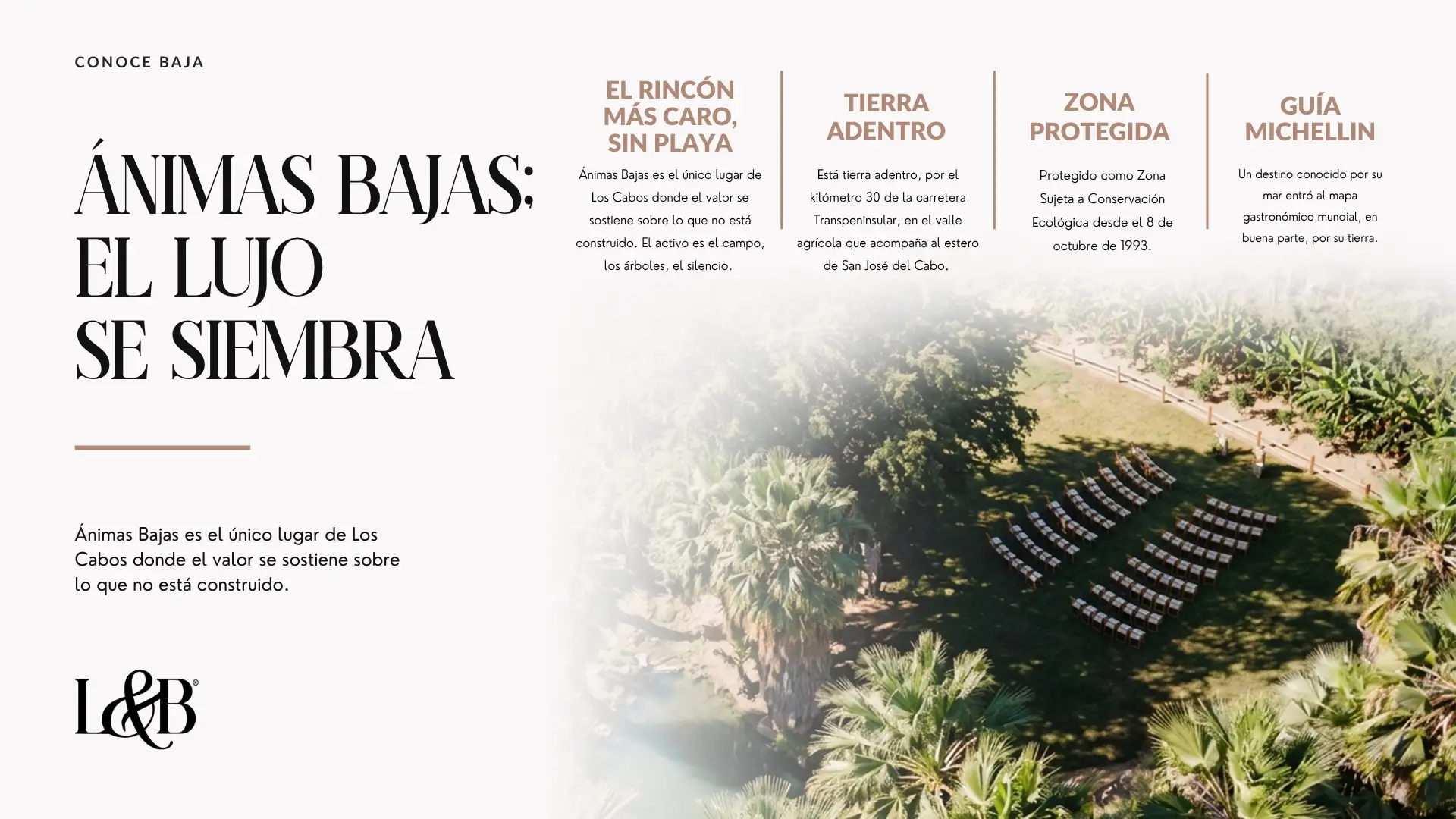
Ánimas Bajas: el lujo se siembra


El éxito de Los Cabos suele narrarse desde sus grandes desarrollos turísticos, sus hoteles de cinco estrellas y su mercado inmobiliario de alto valor. Sin embargo, debajo de esa superficie glamorosa existe un motor silencioso, constante y absolutamente indispensable: los trabajadores del lujo, la fuerza invisible que sostiene el destino.
Son miles de personas —originarias de Baja California Sur, de otros estados del país e incluso de otros países— quienes hacen posible la experiencia premium que vive el visitante o el residente. Desde quienes mantienen impecables los paisajes urbanos hasta quienes operan complejos sistemas de hospitalidad; desde el personal de construcción altamente especializado hasta los proveedores locales que abastecen la industria todos los días. El lujo no ocurre por casualidad: se construye a pulso humano.
A pesar de ello, este sector ha permanecido históricamente en segundo plano. La narrativa del crecimiento rara vez reconoce el valor social y económico de estas personas, aun cuando representan el engranaje que sostiene uno de los destinos más importantes del Pacífico mexicano. Su trabajo define estándares de calidad, moldea la reputación del destino y permite que los modelos de hospitalidad evolucionen.
El crecimiento acelerado de Los Cabos también ha traído desafíos profundos para esta fuerza laboral: movilidad compleja, escasez de vivienda asequible, presión sobre servicios públicos y desigualdades territoriales cada vez más visibles. La distancia entre los espacios donde se genera el lujo y aquellos donde viven quienes lo hacen posible se vuelve, en muchos casos, un indicador de inequidad urbana.
Reconocer a los trabajadores del lujo implica mirar más allá de las cifras turísticas y comprender que la sostenibilidad del destino depende de condiciones laborales dignas, infraestructura alineada con la realidad demográfica y políticas urbanas que integren —y no excluyan— a quienes forman parte de su columna vertebral.
Si Los Cabos aspira a consolidarse como un referente global, debe entender que su verdadero capital no solo está en sus paisajes y su inversión extranjera, sino en las personas que, día a día, convierten el territorio en una experiencia de excelencia. Ellos son la fuerza que permite que el lujo no sea una promesa, sino un estándar.
Luxury workers: the invisible force behind Los Cabos
The success of Los Cabos is often attributed to its large tourist developments, five-star hotels, and high-value real estate market. However, beneath this glamorous surface lies a silent, constant, and absolutely indispensable driving force: luxury workers, the invisible force behind the destination.
Thousands of people—originally from Baja California Sur, other states in the country, and even other countries—make the premium experience enjoyed by visitors and residents possible. From those who keep the urban landscapes impeccable to those who operate complex hospitality systems; from highly specialized construction personnel to local suppliers who supply the industry every day. Luxury does not happen by chance: it is built by human effort.
Despite this, the sector has historically remained in the background. The narrative of growth rarely recognizes the social and economic value of these people, even though they represent the engine that sustains one of the most important destinations on the Mexican Pacific. Their work defines quality standards, shapes the destination’s reputation, and allows hospitality models to evolve.
The rapid growth of Los Cabos has also brought profound challenges for this workforce: complex mobility, a shortage of affordable housing, pressure on public services, and increasingly visible territorial inequalities. The distance between the spaces where luxury is generated and those where the people who make it possible live becomes, in many cases, an indicator of urban inequality.
Recognizing luxury workers means looking beyond tourism figures and understanding that the sustainability of the destination depends on decent working conditions, infrastructure aligned with demographic reality, and urban policies that integrate—rather than exclude—those who form its backbone.
If Los Cabos aspires to establish itself as a global benchmark, it must understand that its true capital lies not only in its landscapes and foreign investment, but also in the people who, day after day, turn the territory into an experience of excellence. They are the force that allows luxury to be not a promise, but a standard.