
Vendida sin pisarla

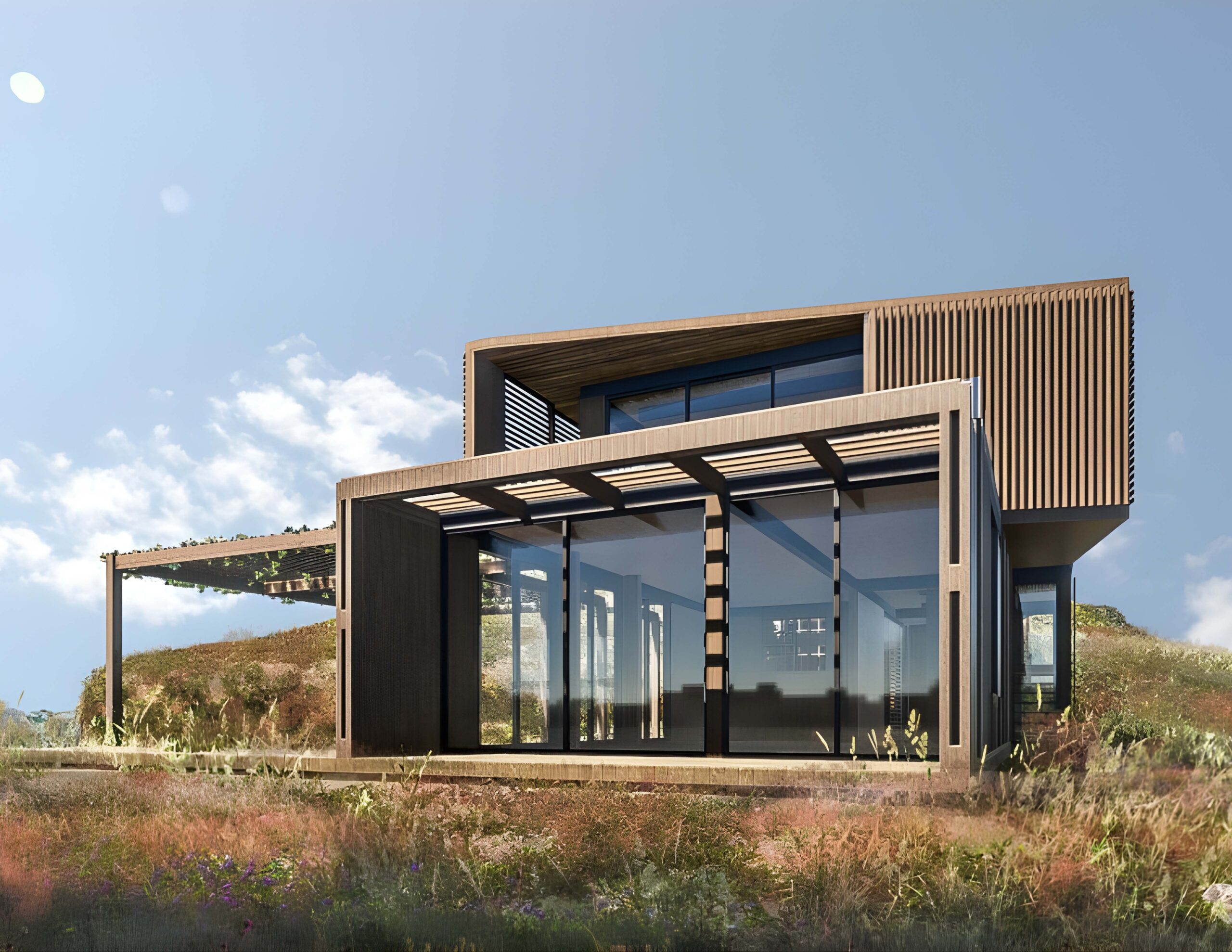
En las zonas costeras, donde la luz es intensa, el viento cambia de carácter cada estación y la humedad desafía a cualquier material, la arquitectura tiene que ser más que una expresión estética: tiene que ser una respuesta precisa al clima. La bioclimática no es una moda ni un concepto aspiracional. Es, en territorios como Los Cabos, una necesidad práctica. Y, aunque el término se usa con ligereza, existen principios que han demostrado funcionar una y otra vez, independientemente de la forma o el estilo.
A diferencia de las soluciones tecnológicas que dependen de sistemas mecánicos, la arquitectura bioclimática trabaja con la energía más antigua y confiable que existe: el clima mismo. No intenta corregirlo ni vencerlo; lo aprovecha, lo domestica, lo convierte en aliado. En Baja California Sur, donde el sol dicta ritmos y la brisa marina puede ser la diferencia entre un espacio habitable o insoportable, esa alianza se vuelve esencial.
Las orientaciones correctas no son un capricho técnico, sino la primera línea de defensa. Colocar los espacios habitables hacia donde la luz es amable y proteger aquellos que reciben la radiación más dura puede reducir, por sí solo, el consumo energético. La sombra —ese recurso tan simple como subestimado— se convierte en arquitectura. Pórticos, aleros profundos y voladizos largos no son adornos: son herramientas que moldean el microclima y permiten que un edificio respire sin depender de sistemas artificiales.
Ventilar correctamente en zonas costeras no es abrir ventanas. Es crear corrientes que funcionen incluso en horas de calor intenso, es dirigir el viento y filtrarlo, es permitir que la brisa se convierta en un sistema natural de enfriamiento. Las casas tradicionales del desierto ya lo hacían: patios interiores, pasillos sombreados, celosías y respiraderos cruzados que movían el aire de forma constante. Hoy, esos principios siguen siendo vigentes, incluso en la arquitectura más contemporánea.
La masa térmica, otro de los fundamentos bioclimáticos, cobra especial relevancia en regiones donde las temperaturas fluctúan drásticamente entre el día y la noche. Muros que absorben calor lentamente y lo liberan al anochecer, pisos que se enfrían en la madrugada y mantienen frescos los espacios más expuestos… son estrategias que no requieren electricidad, solo entendimiento del clima y sensibilidad hacia el comportamiento de los materiales.
Y está también el uso del color, una decisión aparentemente superficial que, en realidad, determina la cantidad de energía que un edificio absorbe o rechaza. En las zonas costeras, donde el sol no perdona, los tonos claros no son una preferencia estética: son una estrategia térmica. Reflejan, protegen, prolongan la vida útil de los materiales y reducen el estrés ambiental del edificio.
Cuando estos principios se aplican de manera consciente, el resultado es una arquitectura que no solo se ve bien, sino que se siente bien. Espacios donde el cuerpo descansa porque la temperatura es estable, donde la luz no encandila sino que acompaña, donde el aire circula sin ruido y sin esfuerzo. Espacios que no dependen de máquinas para ser habitables, porque fueron pensados para funcionar en armonía con su entorno.
En un tiempo en el que la sostenibilidad suele reducirse a paneles solares y certificaciones, la arquitectura bioclimática recuerda algo fundamental: que la mayor innovación sigue siendo el entendimiento profundo del lugar. Las zonas costeras no perdonan la improvisación. Aquí, donde el clima es protagonista, la arquitectura que realmente funciona es la que escucha primero y diseña después.
Y cuando lo logra, el edificio deja de ser un objeto aislado para convertirse en un organismo más del paisaje. No lucha contra el entorno: vive con él. No se protege del clima: se adapta. Y, en esa adaptación, encuentra su forma más auténtica de sostenibilidad.
Bioclimatic architecture for coastal areas: principles that really work
In coastal areas, where light is intense, the wind changes character every season, and humidity challenges any material, architecture must be more than an aesthetic expression: it must be a precise response to the climate. Bioclimatic architecture is not a trend or an aspirational concept. In places like Los Cabos, it is a practical necessity.
And, although the term is used lightly, there are principles that have been proven to work time and time again, regardless of form or style. Unlike technological solutions that rely on mechanical systems, bioclimatic architecture works with the oldest and most reliable energy source there is: the climate itself. It does not attempt to correct or overcome it; it harnesses it, tames it, and turns it into an ally.
In Baja California Sur, where the sun dictates rhythms and the sea breeze can be the difference between a livable or unbearable space, that alliance becomes essential.
The right orientations are not a technical whim, but the first line of defense. Placing living spaces where the light is gentle and protecting those that receive the harshest radiation can, on its own, reduce energy consumption.
Shade—that simple yet underrated resource—becomes architecture. Porticos, deep eaves, and long overhangs are not decorations: they are tools that shape the microclimate and allow a building to breathe without relying on artificial systems. Proper ventilation in coastal areas is not about opening windows.
It means creating currents that work even in hours of intense heat, directing and filtering the wind, and allowing the breeze to become a natural cooling system. Traditional desert houses already did this: interior courtyards, shaded corridors, lattices, and cross vents that moved the air constantly. Today, these principles remain valid, even in the most contemporary architecture.
Thermal mass, another bioclimatic principle, is particularly important in regions where temperatures fluctuate dramatically between day and night. Walls that slowly absorb heat and release it at dusk, floors that cool down in the early morning and keep the most exposed spaces cool… these are strategies that require no electricity, just an understanding of the climate and sensitivity to the behavior of materials.
And then there is the use of color, a seemingly superficial decision that actually determines the amount of energy a building absorbs or rejects. In coastal areas, where the sun is relentless, light colors are not an aesthetic preference: they are a thermal strategy. They reflect, protect, prolong the life of materials, and reduce the environmental stress on the building.
When these principles are consciously applied, the result is architecture that not only looks good but also feels good. Spaces where the body rests because the temperature is stable, where the light does not dazzle but accompanies, where the air circulates without noise and without effort. Spaces that do not depend on machines to be habitable, because they were designed to function in harmony with their environment.
At a time when sustainability is often reduced to solar panels and certifications, bioclimatic architecture reminds us of something fundamental: that the greatest innovation continues to be a deep understanding of the place. Coastal areas do not forgive improvisation. Here, where the climate is the protagonist, the architecture that really works is the one that listens first and designs later.
And when it succeeds, the building ceases to be an isolated object and becomes another organism in the landscape. It does not fight against the environment: it lives with it. It does not protect itself from the climate: it adapts. And in that adaptation, it finds its most authentic form of sustainability.