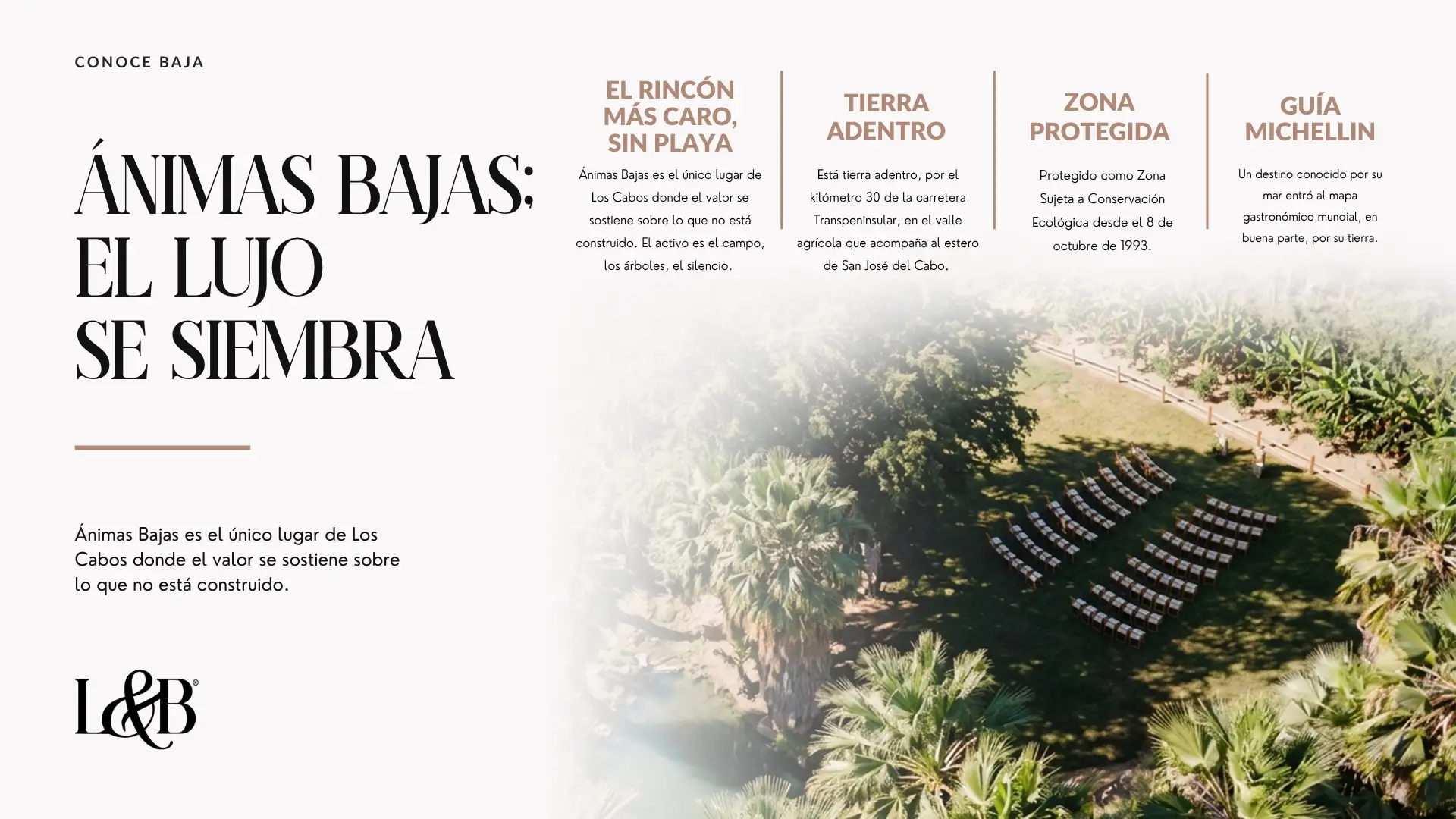
Ánimas Bajas: el lujo se siembra

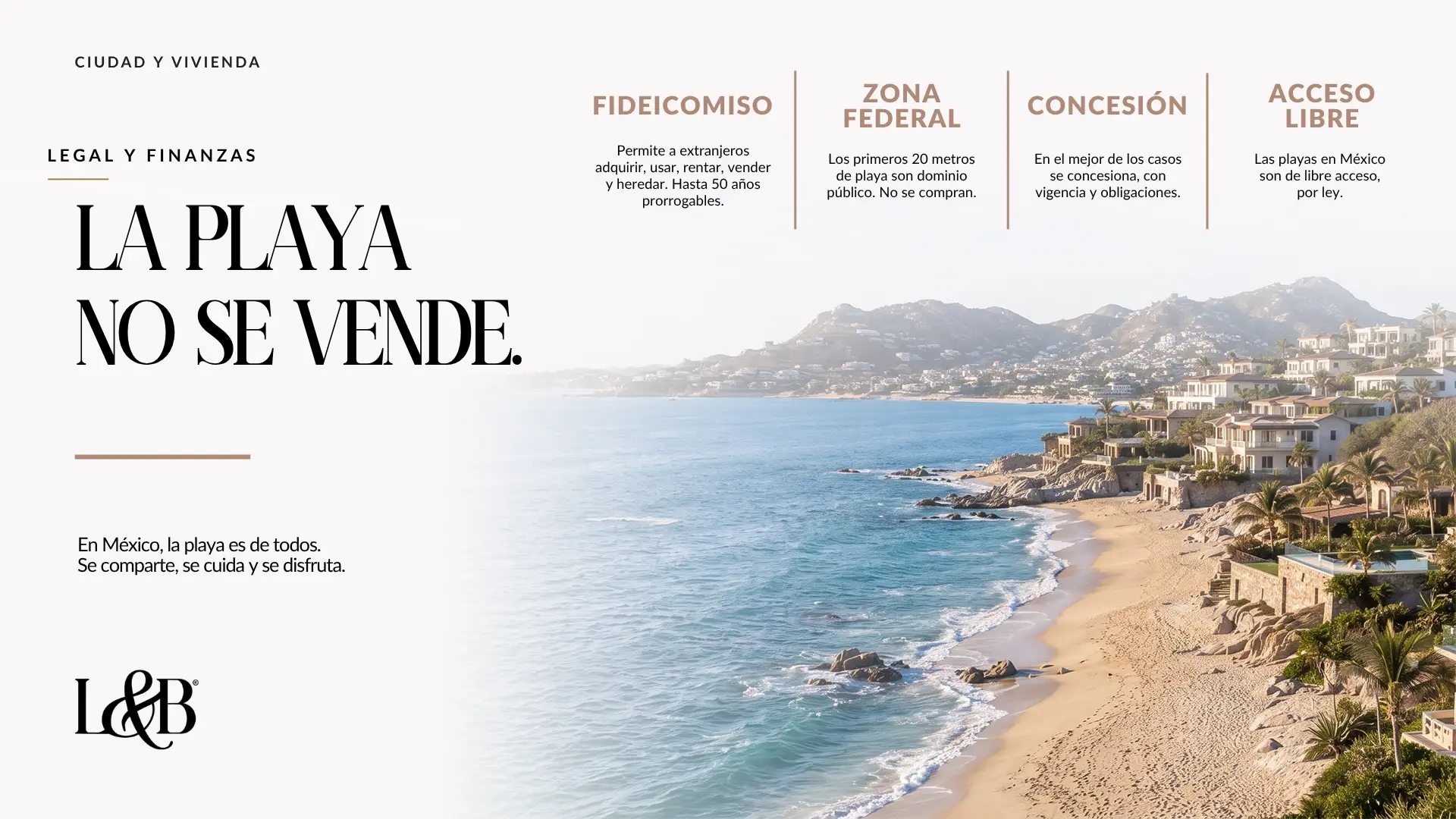
La playa no se vende
Hay una pregunta que se repite en cada mesa donde se sienta un comprador extranjero: “entonces, ¿la casa es mía o no es mía?”. La respuesta corta es sí. La respuesta completa es más interesante, y explica por qué la costa mexicana funciona distinto a cualquier otra del mundo.
El punto de partida es el artículo 27 constitucional, fracción I. Establece una zona restringida de cien kilómetros a lo largo de las fronteras y cincuenta a lo largo de las playas, dentro de la cual una persona extranjera no puede adquirir el dominio directo de tierras y aguas. Todo Los Cabos está dentro de esa franja. Sin excepción.
Eso no cierra la puerta, la ordena. La Ley de Inversión Extranjera prevé el fideicomiso: un banco mexicano actúa como fiduciario y el comprador extranjero es el fideicomisario, con derecho pleno a usar el inmueble, rentarlo, remodelarlo, venderlo y heredarlo. Requiere permiso de la Secretaría de Relaciones Exteriores, se otorga por un máximo de cincuenta años y es prorrogable a solicitud del interesado. No es una renta larga ni una propiedad de segunda: es la figura que la ley diseñó para esto.
Y luego está lo que no se puede tener nunca, ni por fideicomiso ni por nada. La Zona Federal Marítimo Terrestre es una franja de veinte metros de tierra firme contigua a la playa. Es bien de dominio público de la Federación: inalienable e imprescriptible. No se compra. En el mejor de los casos se concesiona, con vigencia, con obligaciones y con la posibilidad de no ser renovada. Y las playas, por ley, son de libre acceso.
Yo pienso que ahí están las tres letras chiquitas que más caro cuestan. La primera: creer que los veinte metros de zona federal vienen incluidos en la compra. No vienen. La segunda: no revisar la vigencia ni las obligaciones de esa concesión antes de firmar, porque se heredan. La tercera: comprar una vista creyendo que se compró el derecho a esa vista, cuando lo que hay enfrente es dominio público o un predio con otro uso permitido.
Desde mi punto de vista, el marco legal mexicano en esto es claro y lleva décadas funcionando. Lo que falla no es la ley: es la explicación. Se vende la playa en el folleto y luego se explica el fideicomiso en la firma, cuando debería ser al revés.
Porque en México la playa no se vende. Se comparte. Y eso, bien explicado, es un argumento de venta, no un obstáculo.
The Beach Is Not for Sale
There is one question that comes up at every table where a foreign buyer sits down: “so, is the house mine or not?” The short answer is yes. The full answer is more interesting, and it explains why the Mexican coast works differently from any other in the world.
The starting point is Article 27, section I, of the Constitution. It establishes a restricted zone of one hundred kilometers along the borders and fifty along the beaches, within which a foreign national cannot acquire direct dominion over land and water. All of Los Cabos sits inside that strip. Without exception.
That does not close the door, it organizes it. The Foreign Investment Law provides for the fideicomiso: a Mexican bank acts as trustee and the foreign buyer is the beneficiary, with full rights to use the property, rent it, remodel it, sell it and pass it on. It requires a permit from the Ministry of Foreign Affairs, is granted for a maximum of fifty years, and can be extended at the holder’s request. It is not a long lease or second-class ownership. It is the instrument the law designed for exactly this.
And then there is what can never be owned, not through a trust and not through anything else. The Federal Maritime Land Zone is a twenty-meter strip of dry land adjoining the beach. It is federal public domain property: inalienable and not subject to adverse possession. It cannot be bought. At best it is granted under concession, with an expiration date, with obligations, and with the possibility of not being renewed. And beaches, by law, are open to the public.
I think that is where the three pieces of fine print that cost the most money live. First: assuming those twenty federal meters come included in the purchase. They do not. Second: not reviewing the term and the obligations of that concession before signing, because they transfer with the property. Third: buying a view and believing you bought the right to that view, when what sits in front is public domain or a lot with a different permitted use.
From my point of view, the Mexican legal framework here is clear and has worked for decades. What fails is not the law. It is the explanation. The beach gets sold in the brochure and the trust gets explained at signing, when it should be the other way around.
Because in Mexico the beach is not for sale. It is shared. And explained properly, that is a selling point, not an obstacle.