Vendida sin pisarla

Ánimas Bajas: el lujo se siembra
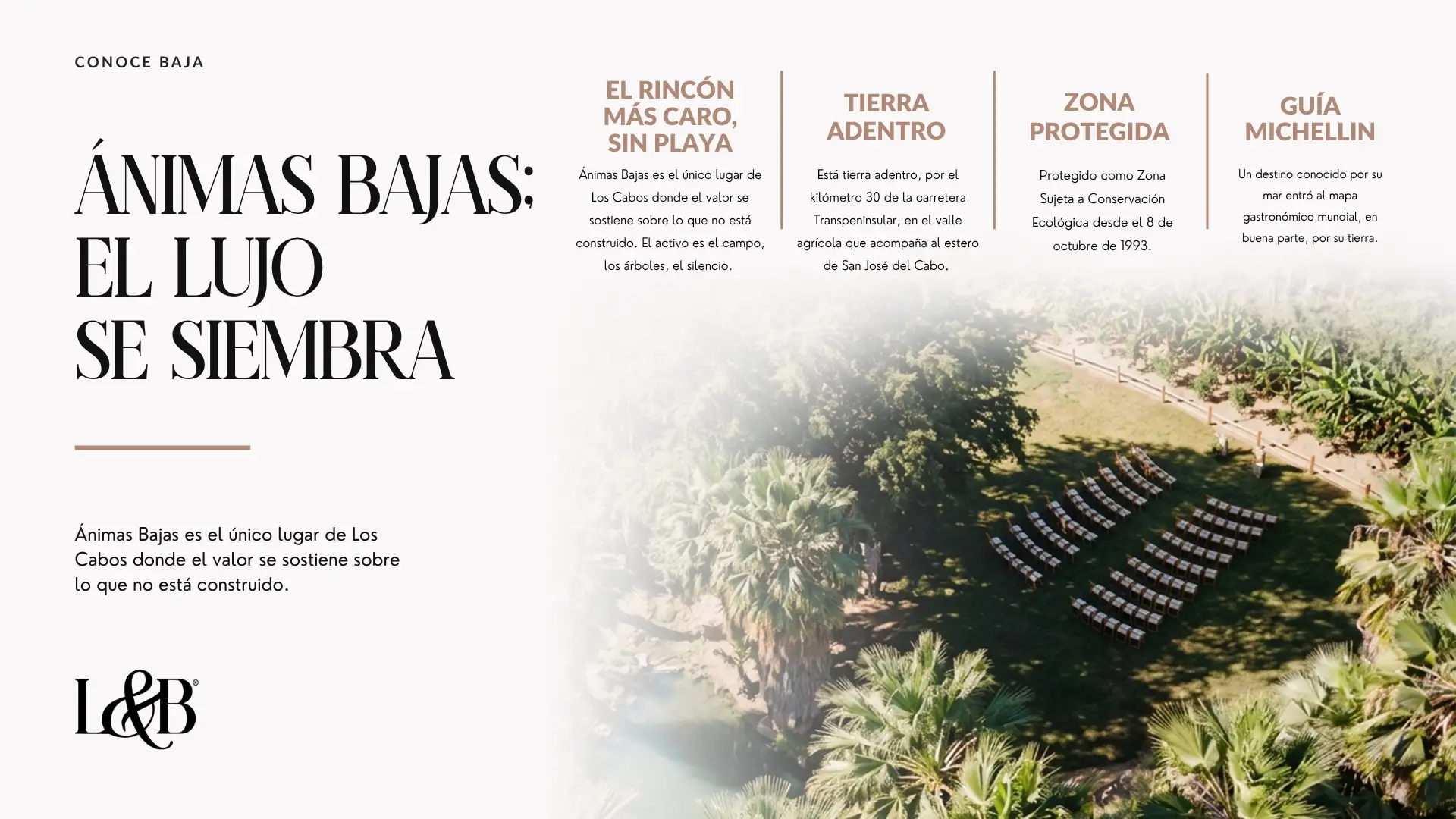
Mucha gente que ha comido en Ánimas Bajas cree que estuvo cerca del mar. No lo estuvo. Y ahí empieza lo interesante de este lugar: es el rincón más caro de Los Cabos que no tiene playa.
Ánimas Bajas está tierra adentro, por el kilómetro 30 de la carretera Transpeninsular, en el valle agrícola que acompaña al estero de San José del Cabo. Ese estero no es un adorno del paisaje: es una de las zonas de agua dulce más importantes de la península. Está protegido como Zona Sujeta a Conservación Ecológica desde el 8 de octubre de 1993, fue inscrito como sitio Ramsar de importancia internacional el 2 de febrero de 2008 y está reconocido como área de importancia para la conservación de las aves. Si ahí hay campo, es por el agua.
Durante generaciones eso fue exactamente lo que era: campo. Huerta, palma, hortaliza, ranchos de camino de terracería. Y en algún momento alguien hizo la operación al revés de todo lo que se hacía en este destino: en vez de llevar al comensal al mar, lo llevó al surco. Hoy ese valle concentra algunas de las mesas más buscadas de la región.
El reconocimiento llegó de afuera. En 2024, la Guía Michelin publicó su primera selección de México, con seis entidades incluidas y Baja California Sur entre ellas: 157 restaurantes seleccionados, 18 estrellas y seis estrellas verdes otorgadas por sostenibilidad. Un destino conocido por su mar entró al mapa gastronómico mundial, en buena parte, por su tierra.
Yo pienso que ahí está la lección, y es incómoda para nuestra industria. Ánimas Bajas es el único lugar de Los Cabos donde el valor se sostiene sobre lo que no está construido. El activo es el campo abierto, la hilera de árboles, el silencio. Nadie viaja media hora tierra adentro para ver un desarrollo.
Y eso lo vuelve frágil de una manera muy específica. Si se construye encima, desaparece exactamente aquello que lo hizo valioso; y el agua que lo sostiene es la misma por la que la ciudad ya está peleando. Desde mi punto de vista, no es un debate entre conservar o desarrollar: es entender que aquí conservar es la forma más rentable de desarrollar.
El lujo en Ánimas Bajas no se edificó. Se sembró. Y eso, a diferencia de una vista al mar, no se puede replicar comprando el terreno de junto.
In Ánimas Bajas, Luxury Is Planted
Plenty of people who have eaten in Ánimas Bajas believe they were near the ocean. They were not. And that is where this place gets interesting: it is the most expensive corner of Los Cabos with no beach at all.
Ánimas Bajas sits inland, around kilometer 30 of the Transpeninsular highway, in the farming valley that accompanies the San José del Cabo estuary. That estuary is not landscape decoration. It is one of the most important freshwater areas on the peninsula. It has been protected as an Ecological Conservation Zone since October 8, 1993, was listed as a Ramsar wetland of international importance on February 2, 2008, and is recognized as an important bird conservation area. If there is farmland there, it is because of the water.
For generations that is exactly what it was: farmland. Orchards, palms, vegetable rows, ranches at the end of dirt roads. And at some point someone ran the operation backwards from everything else in this destination: instead of taking the diner to the sea, they took the diner to the furrow. Today that valley holds some of the most sought-after tables in the region.
The recognition came from outside. In 2024 the MICHELIN Guide published its first Mexico selection, covering six states with Baja California Sur among them: 157 restaurants selected, 18 stars, and six Green Stars awarded for sustainability. A destination known for its ocean entered the world culinary map largely because of its soil.
I think that is the lesson, and it is an uncomfortable one for our industry. Ánimas Bajas is the only place in Los Cabos where value rests on what has not been built. The asset is the open field, the row of trees, the quiet. Nobody drives half an hour inland to look at a development.
And that makes it fragile in a very specific way. Build on top of it and you erase precisely what made it valuable; and the water sustaining it is the same water the city is already fighting over. From my point of view, this is not a debate between conserving and developing. It is understanding that here, conserving is the most profitable form of developing.
Luxury in Ánimas Bajas was not built. It was planted. And unlike an ocean view, that cannot be replicated by buying the lot next door.