
Ánimas Bajas: el lujo se siembra

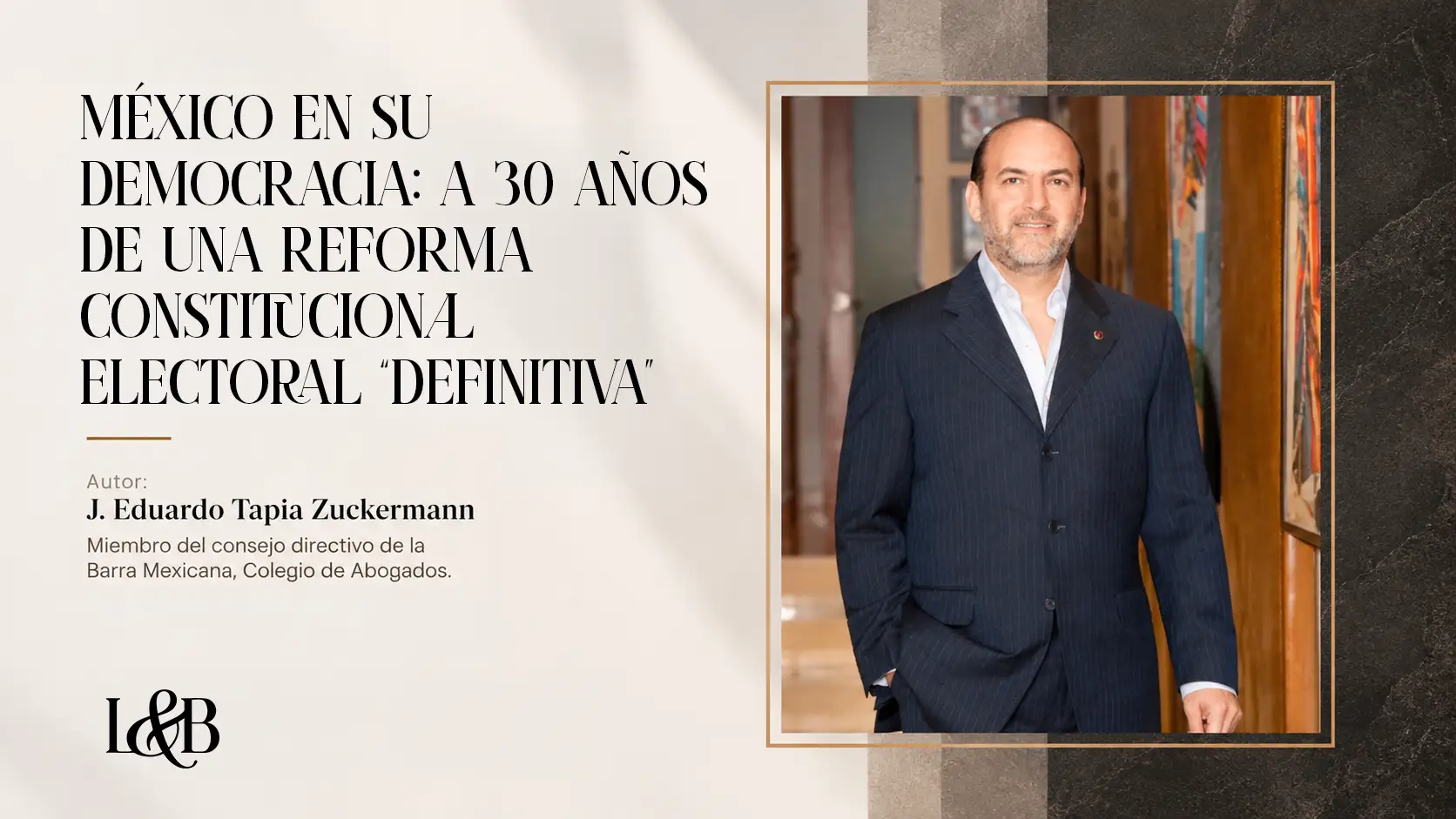
Por J. Eduardo Tapia Zuckermann
El 22 de agosto de 1996 el entonces presidente Ernesto Zedillo mandó publicar en el Diario Oficial de la Federación un paquete de reformas electorales de gran calado que transformó a la postre el escenario político nacional como no se había registrado en más de setenta años.
En efecto, con las reformas a la legislación secundaria correspondiente, publicadas el 22 de noviembre subsiguiente, se implementó un entramado institucional que sentó las bases para que fuerzas políticas distintas al bloque oficialista pudieran aspirar, con cierta viabilidad, a ocupar la llamada primera magistratura del país; es decir, la presidencia de la república.
La primera aduana hacia la llamada alternancia se registró con los resultados de las elecciones federales de 1997. En dichos comicios el Partido Revolucionario Institucional perdió la mayoría legislativa y el 1º de septiembre de ese año, en voz del diputado Porfirio Muñoz Ledo, se contestó el tercer informe de gobierno de ese sexenio por parte de un militante ajeno al partido en el poder.
Decía don Jesús Reyes Heroles que «en política, la forma es fondo», y aquella contestación resultó, además de histórica, simbólica, pues la glosa del informe ya no fue un asunto de mero trámite, sino que el Poder Legislativo reivindicó una función que políticamente había sido desdibujada por la preponderancia del Poder Ejecutivo durante la mayor parte del siglo veinte.
No obstante que otorgar el calificativo de «definitiva» a una reforma cuya materia es altamente volátil y sujeta a coyunturas político-electorales de corto plazo no fue lo más afortunado, la reforma de 1996 sí merece un trato especial en su análisis, dados los resultados positivos para la consolidación, efímera, de nuestra novel democracia y especialmente en la organización profesional de los comicios federales.
Primeramente, a partir de finales de noviembre de 1997, se conformó el Instituto Federal Electoral (IFE), antecesor del actual Instituto Nacional Electoral, sin una intervención directa y totalizadora del Poder Ejecutivo Federal. La persona titular de la Secretaría de Gobernación dejó de tener el carácter de árbitro final y se confió la dirección del IFE a ciudadanos propuestos por los partidos políticos existentes, el Poder Ejecutivo y el Legislativo, con una conformación impar para evitar empates técnicos. En resumen, se profesionalizó el órgano electoral que durante las tres décadas siguientes administró de manera imparcial y técnica todas las elecciones federales, tanto intermedias o camerales como presidenciales.
Con esta reforma, los peldaños de la incipiente democracia mexicana también fueron reforzados con la incorporación del Tribunal Electoral a la estructura del Poder Judicial Federal, para dejar de ser un tribunal meramente administrativo, dependiente del Poder Ejecutivo, y convertirse en máxima instancia jurisdiccional en la materia. Asimismo, se crearon diversos juicios constitucionales como las acciones de inconstitucionalidad y las controversias constitucionales, además del juicio para la protección de los derechos político-electorales de los ciudadanos.
La idea central fue arrebatar el control político de las elecciones al poder político transitoriamente en ejercicio del poder público y replicar, en años siguientes, el modelo en los estados de la república. Por ejemplo, la Comisión Federal Electoral, que formalmente había dejado de existir en 1991 con la creación del IFE, concluiría por fin su labor vigilante del proceso y transferiría dicha función a un órgano ciudadano ajeno, por lo menos en teoría, a los vaivenes políticos sexenales, pues la designación rebasaría en tiempo a la presidencia de México en turno.
No obstante la evidente bondad de la reforma promulgada hace exactamente treinta años, y que garantizó tres transiciones pacíficas del poder que movieron el péndulo político primero a la derecha, luego al centro y finalmente a la izquierda, fue necesario modificar algunos de sus preceptos que vieron agotados sus beneficios.
Así, en 2007, después de las competidas elecciones presidenciales, los partidos con mayoría legislativa que perdieron el proceso comicial del Ejecutivo Federal endurecieron reglas de financiamiento público y de acceso a los órganos de dirección del IFE. Precisamente por ese encono se sembraron semillas de discordia que germinaron en una contrarreforma que, vista a la distancia, fue un duro retroceso al proceso democrático en el país.
A raíz de los cambios de 2023 a la Constitución y a la legislación secundaria respectiva, la sana separación entre el poder público y los órganos electorales se vio amenazada al tener un Instituto Nacional Electoral y un Tribunal Electoral mucho más cercanos e identificados con el partido político en el poder.
Debemos, por tanto, cuestionar estas modificaciones a las reglas del juego democrático que intentan volver al estado de cosas que imperaba en los años noventa del siglo pasado. La democracia mexicana es un bien superior al de cualquier partido político que intente monopolizarla.
J. Eduardo Tapia Zuckermann
Abogado en México, Nueva York y Washington, D.C.
Consejero (Vocal) Nacional de la Barra Mexicana, Colegio de Abogados, A.C. y Coordinador General de Capítulos BMA
Socio Administrador en Tapia Zuckermann, S.C.
Los Cabos, Baja California Sur
By J. Eduardo Tapia Zuckermann
On August 22, 1996, then-President Ernesto Zedillo ordered the publication in the Official Gazette of the Federation (Diario Oficial de la Federación) of a sweeping package of electoral reforms that would ultimately transform Mexico’s political landscape in a way not seen in more than seventy years.
With the corresponding amendments to secondary legislation, published on November 22 of that same year, an institutional framework was put in place that laid the groundwork for political forces outside the ruling bloc to aspire, with some real prospect of success, to the country’s highest office: the presidency of the republic.
The first checkpoint on the road to political alternation came with the results of the 1997 federal elections. In those elections, the Institutional Revolutionary Party (PRI) lost its legislative majority, and on September 1 of that year, Congressman Porfirio Muñoz Ledo delivered Congress’s formal response to the president’s third State of the Nation address, the first time that response came from a member of a party other than the one in power.
Jesús Reyes Heroles once said that «in politics, form is substance,» and that response proved not only historic but symbolic. Congressional review of the presidential address was no longer a mere formality; the Legislative Branch reclaimed a function that had been politically eroded by the dominance of the Executive Branch for most of the twentieth century.
Although calling «definitive» a reform in a field so volatile and subject to short-term political and electoral circumstances was not the happiest choice of words, the 1996 reform does deserve special attention, given its positive results for the consolidation, however short-lived, of our young democracy, and especially for the professional administration of federal elections.
First, beginning in late November 1997, the Federal Electoral Institute (IFE), predecessor of today’s National Electoral Institute (INE), was formed without the direct and all-encompassing involvement of the Federal Executive. The Secretary of the Interior ceased to serve as final arbiter, and leadership of the IFE was entrusted to citizens nominated by the existing political parties and by the Executive and Legislative branches, with an odd number of members to prevent tie votes. In short, the electoral body was professionalized, and over the following three decades it administered every federal election, both midterm congressional and presidential, impartially and with technical rigor.
This reform also reinforced the foundations of Mexico’s emerging democracy by bringing the Electoral Tribunal into the structure of the Federal Judiciary. It ceased to be a merely administrative court dependent on the Executive and became the highest judicial authority in electoral matters. Various constitutional proceedings were also created, such as actions of unconstitutionality and constitutional controversies, along with a proceeding for the protection of citizens’ political and electoral rights.
The central idea was to wrest political control of elections away from whoever temporarily held public power, and to replicate the model in the states in the years that followed. For example, the Federal Electoral Commission, which had formally ceased to exist in 1991 with the creation of the IFE, would at last conclude its oversight role and transfer that function to a citizen-led body independent, at least in theory, of the political swings of each six-year term, since appointments would outlast the sitting president.
Despite the clear merits of the reform enacted exactly thirty years ago, which guaranteed three peaceful transfers of power that swung the political pendulum first to the right, then to the center, and finally to the left, some of its provisions had run their course and needed to be revised.
Thus, in 2007, after a closely contested presidential election, the parties holding a legislative majority, which had lost the race for the presidency, tightened the rules on public financing and on access to the IFE’s governing bodies. That very animosity sowed seeds of discord that later grew into a counter-reform which, seen in hindsight, was a serious setback for democracy in Mexico.
Following the 2023 changes to the Constitution and the related secondary legislation, the healthy separation between public power and the electoral bodies came under threat, with a National Electoral Institute and an Electoral Tribunal far closer to, and more identified with, the ruling party.
We must therefore question these changes to the democratic rules of the game, which seek to return to the state of affairs that prevailed in the 1990s. Mexican democracy is a greater good than any political party that seeks to monopolize it.
J. Eduardo Tapia Zuckermann
Attorney admitted in Mexico, New York, and Washington, D.C.
National Board Member (Vocal), Barra Mexicana, Colegio de Abogados, A.C., and General Coordinator of BMA Chapters
Managing Partner, Tapia Zuckermann, S.C.
Los Cabos, Baja California Sur