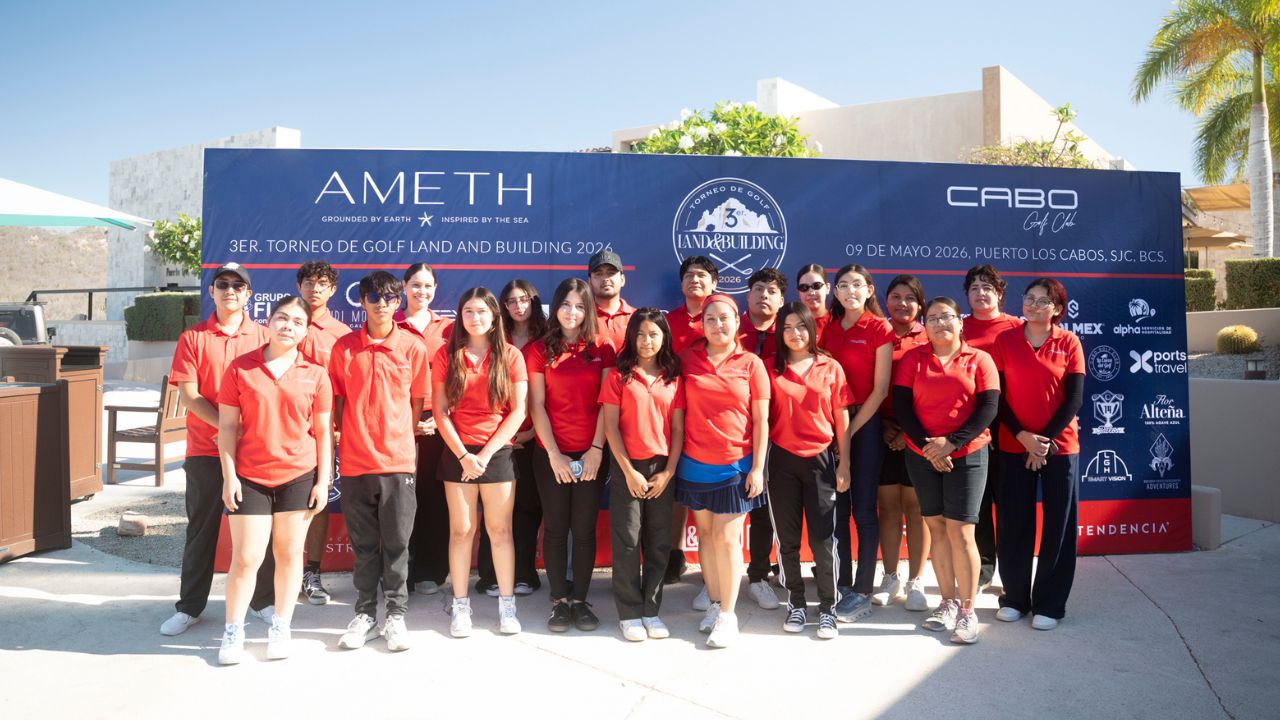
3er Torneo de Golf Land & Building 2026

No es una ciudad, son cuatro
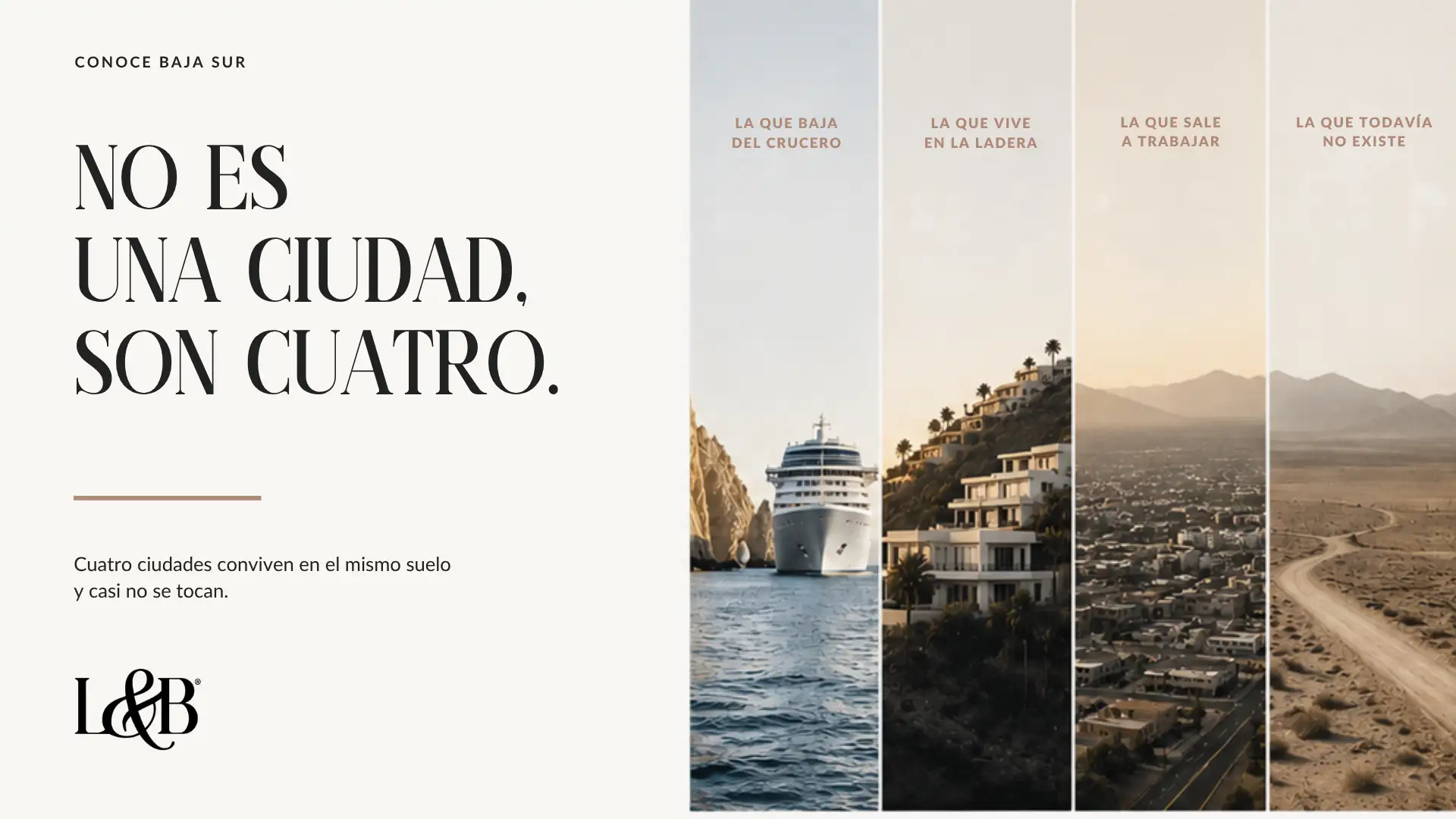
Tengo años viviendo aquí y todavía me pasa algo curioso: cuando digo “Cabo San Lucas”, cada quien entiende una cosa distinta. Con el tiempo entendí que no es un problema de lenguaje. Es que sobre el mismo suelo conviven cuatro ciudades que casi no se tocan.
La primera baja de un barco. Entre enero y julio de 2025 llegaron 161 cruceros con 605,763 pasajeros, según la Dirección Municipal de Turismo del Ayuntamiento de Los Cabos. Esa ciudad flotante dura seis horas, camina cuatro cuadras y se va. Aun así, en siete meses movió el triple de gente de la que vive aquí: el Censo 2020 del INEGI contó 202,694 habitantes en Cabo San Lucas. Desde mi punto de vista, ese solo dato explica buena parte de por qué la marina se siente como se siente.
La segunda ciudad vive en la ladera. Es la del residente extranjero y del propietario de segunda casa, que mide el año en temporadas, compra en dólares y conoce el aeropuerto mejor que el centro. Es una ciudad ordenada, callada y cara, con una relación cordial pero distante con el resto.
La tercera sale de su casa a las cinco de la mañana. Es la del trabajador que sostiene a las otras dos: cocina, construye, maneja, limpia, opera. Vive en colonias que no aparecen en ningún folleto y que casi siempre crecieron antes de que llegara la infraestructura, no después. Yo opino que es la ciudad más importante de las cuatro y la que menos aparece en las conversaciones sobre desarrollo.
La cuarta todavía no existe. Está en los planos que hoy se dibujan, en los permisos que se están firmando y en las hectáreas que ya cambiaron de dueño pero no de aspecto. Es la única sobre la que aún podemos decidir algo, y es justo de la que menos se habla en público.
Yo pienso que nuestro error no es que existan cuatro ciudades. Eso pasa en cualquier destino turístico maduro del mundo. El error es planear, invertir y comunicar como si existiera una sola, casi siempre la que se ve desde el agua. Cuando el agua, la vialidad o la vivienda se calculan para una ciudad de doscientos mil habitantes que solo por mar recibe más de un millón de visitantes al año, el número no falla por poco: falla de origen.
Vale la pena recorrer las cuatro. No para decidir cuál es la verdadera, porque las cuatro lo son, sino para hacernos una pregunta que llevo tiempo rumiando: ¿cuál de ellas estamos construyendo cuando decimos que estamos construyendo Cabo San Lucas?
It’s Not One City. It’s Four.
I have lived here for years, and something still catches me off guard: when I say “Cabo San Lucas,” everyone hears something different. In time I understood it is not a language problem. It is that four cities share the same ground and barely touch one another.
The first one steps off a ship. Between January and July of 2025, 161 cruise ships arrived carrying 605,763 passengers, according to the Municipal Tourism Office of Los Cabos. That floating city lasts six hours, walks four blocks and leaves. Even so, in seven months it moved three times more people than actually live here: the 2020 national census counted 202,694 residents in Cabo San Lucas. From my point of view, that single figure explains much of why the marina feels the way it feels.
The second city lives on the hillside. It belongs to the foreign resident and the second-home owner, who measures the year in seasons, buys in dollars and knows the airport better than downtown. It is orderly, quiet and expensive, on cordial but distant terms with everyone else.
The third leaves home at five in the morning. It belongs to the worker who holds up the other two: cooking, building, driving, cleaning, operating. It lives in neighborhoods that appear in no brochure, neighborhoods that almost always grew before the infrastructure arrived, not after. I think it is the most important of the four, and the one that comes up least in conversations about development.
The fourth does not exist yet. It is in the plans being drawn today, in the permits being signed, in the hectares that have already changed owners but not appearance. It is the only one we can still decide something about, and it is precisely the one least discussed in public.
I think our mistake is not that four cities exist. That happens in every mature tourist destination in the world. The mistake is to plan, invest and communicate as if there were only one, almost always the one you see from the water. When water, roads and housing are sized for a city of two hundred thousand residents that takes in more than a million visitors a year by sea alone, the number does not miss by a little. It is wrong from the start.
All four are worth walking through. Not to decide which one is real, because all four are, but to ask a question I have been chewing on for a while: which of them are we building when we say we are building Cabo San Lucas?